Thursday, 24 October 2019

Immagine correlata

The English language owes a great debt to Shakespeare. He invented over 1700 of our common words by changing nouns into verbs, changing verbs into adjectives, connecting words never before used together, adding prefixes and suffixes, and devising words wholly original. Read more here.


Thursday, 17 October 2019

THE HISTORY OF IRELAND

Risultati immagini per ireland

Risultati immagini per ireland

Risultati immagini per ireland

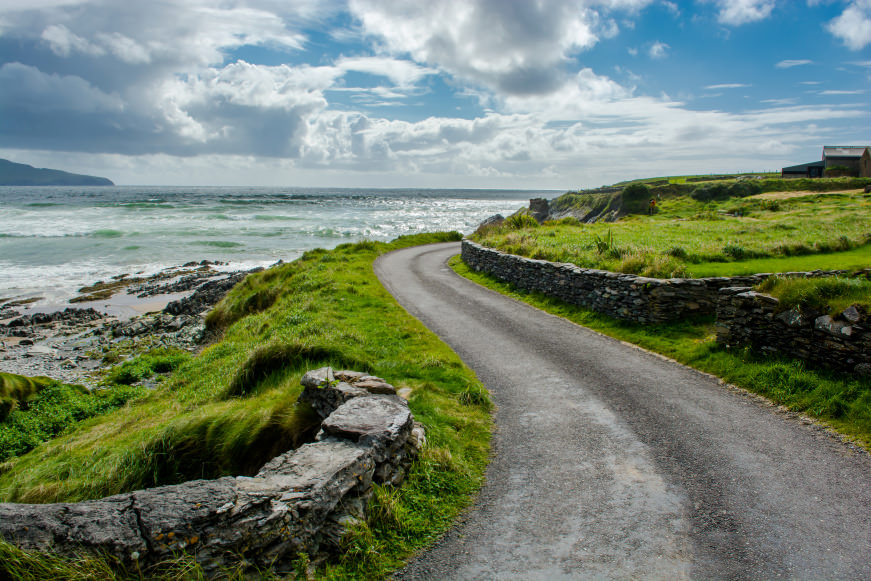
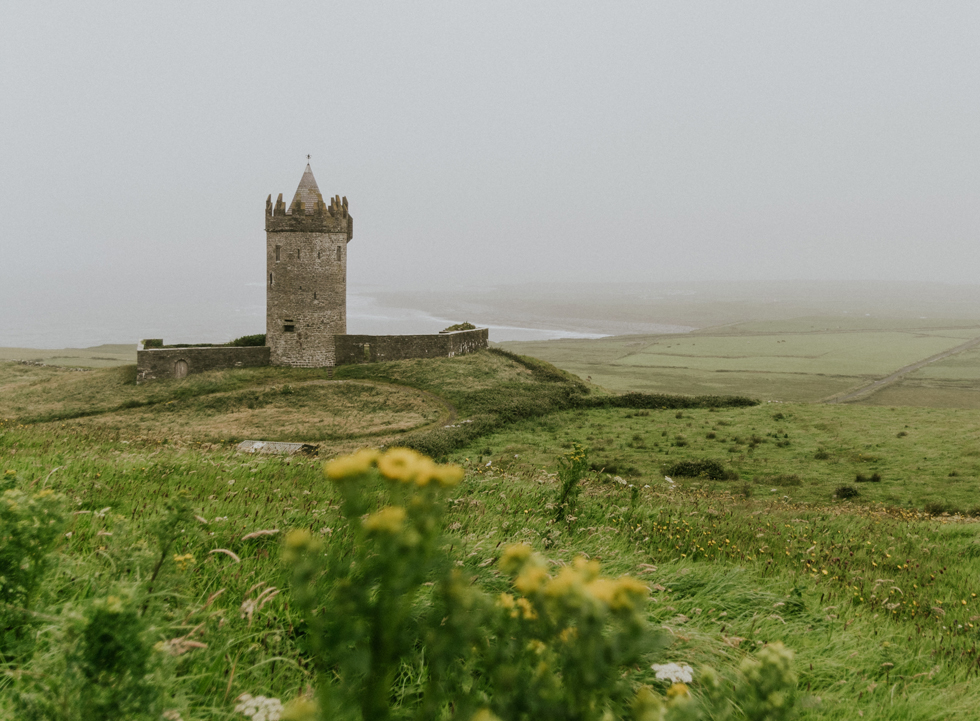
Here  you can discover the history of Ireland as well as its own distinctive Gaelic culture.  

Tuesday, 15 October 2019

THE ELEMENTS OF DRAMA


A play is a form of literature written intentionally for theatrical performance. Most of the parts in a play are dialogues between characters intended to be performed by actors and actresses to move the story along. 
There are six main elements of drama which serve as the basis of producing a successful play.  Altogether, they provide a building block by which dramatic works can be analyzed and evaluated. By knowing and using the elements of drama, the skills needed in creating a successful performance, as well as the skills required to analyze a drama, could be developed. 

The followings are the elements of drama and their brief description:

Plot  
Referring to the basic storyline of the play, the plot is the structure of a play which tells what happens as the story goes on. The plot structure can be divided into six stages: 
  • The exposition is simply an introductory part that provides the background information needed to properly understand the story. 
  • The inciting incident, or conflict, is the event that sets the action of the play in motion. It is what gets the story going. 
  • The rising action is a series of events, including complications and discoveries which create the dramatic climax of a plot.
  • The climax is the turning point, or the peak, of a plot which holds an utmost emotional intensity of the play. 
  • The falling action is a series of events following the climax that leads to the solution of the conflicts.
  • The denouement serves as the conclusion of the plot in which the conflicts are resolved. It is the ending scene of the drama. 

Character
Characters are the people, or sometimes animals, who are portrayed by the actors and actresses in the play. They are one of the main components that move the action of the play forward. Characters can be categorized into three types according to the roles they play. The main character of the play is known as the protagonist. The antagonist is the character who opposes the protagonist. The other characters are called the secondary characters. They may have a major part or a minor involvement in the drama.

Setting
The setting is the place, together with other conditions, such as time and the environment, involved in which the events occur. The setting can be presented through the visual elements which deal with the scenes, costumes and special effects used in it. The setting can also be enhanced by using  sound effects and music.

Theme
The theme refers to the message that is intended to be expressed through the story. In other word, it is the main idea or the lesson to be learned from the play. 

Genre
Genre is the type of play. The examples of genre in which the play can be classified include tragedy, comedy, romantic, mystery, and historical play.  

Audience
Audience is a group of people who watch the play. Audience can be said to be the most important element of drama to be considered about, since it is the audience that determine whether the play is successful or not. Also, many playwrights write the plot of the play with a great concern regarding to their groups of audience rather than their own interests. 

Here you can find my previous post about the basic elements of drama.

Tuesday, 8 October 2019

THE ELIZABETHAN AGE - THE CHAIN OF BEING


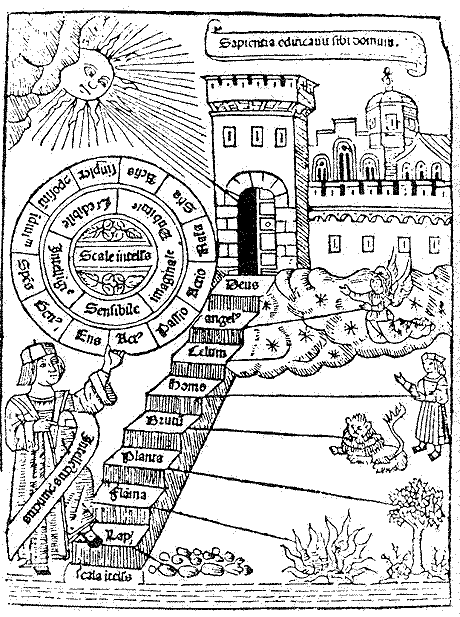
The Chain of Being or scala naturæ is a classical conception of the metaphysical order of the universe in which all beings from the most basic up to the very highest and most perfect being are hierarchically linked to form one interconnected whole. Read more here.

Friday, 27 September 2019

THE SIX WIVES OF HENRY VIII - 4^C LINGUISTICO

Risultati immagini per henry viii

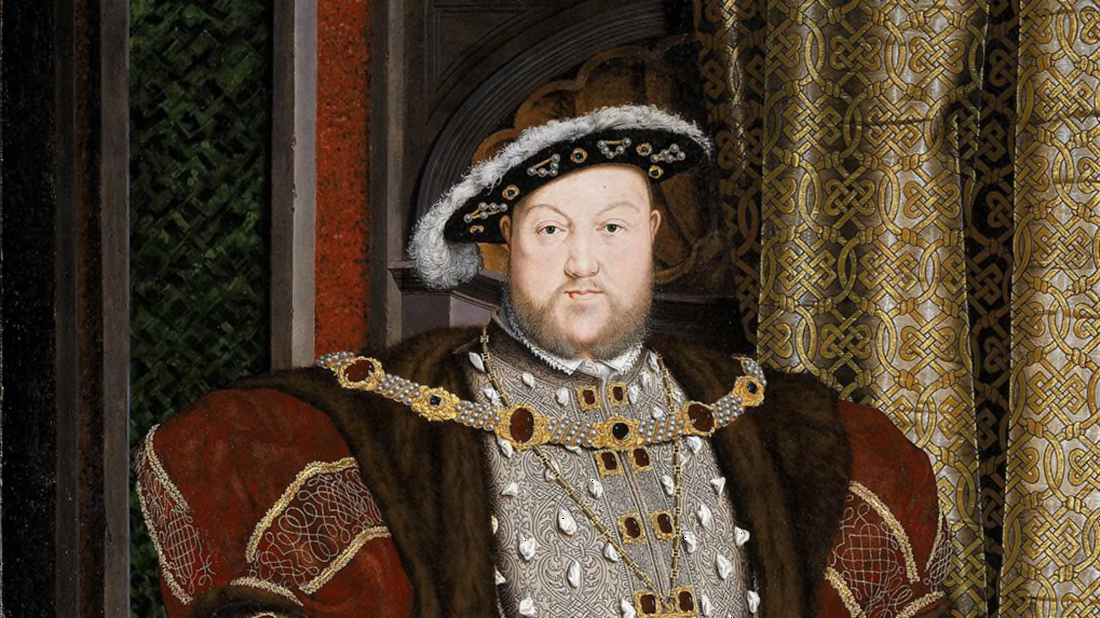
Henry VIII, king of England (1509–47) presided over the beginnings of the English Renaissance and the English Reformation. His six wives were, successively, Catherine of Aragon (the mother of the future queen Mary I), Anne Boleyn (the mother of the future queen Elizabeth I), Jane Seymour (the mother of Henry’s successor, Edward VI), Anne of Cleves, Catherine Howard, and Catherine Parr.  
Everyone recognises his portrait: a fat, larger-than-life individual, wearing clothes set with jewels and sporting a neat red beard. This is Henry in later life: in his youth he was handsome and athletic, the most eligible prince in Europe.  Henry was also a complex man: intelligent, boisterous, flamboyant, extravagant. Athletic, musical, a poet. Ruthless, arrogant, passionate. Henry’s driving desire for a male heir was to lead him to divorce two wives and have two wives beheaded: it led to religious revolution and the creation of the Church of England, the Dissolution of the Monasteries and the Reformation.
The decisions that Henry VIII made during his reign were to shape modern Britain. Read here

Sunday, 22 September 2019

BACK-TO-SCHOOL ACTIVITIES


Lots of activities for the first days of school and ideas for all year as well as tons of grammar and vocabulary exercises here and here.

Monday, 2 September 2019

SEPTEMBER

Risultati immagini per september landscape

"September days have the warmth of summer in their briefer hours, but in their lengthening evenings a prophetic breath of autumn. The cricket chirps in the noontide, making the most of what remains of his brief life. The bumblebee is busy among the clover blossoms of the aftermath, and their shrill and dreamy hum hold the outdoor world above the voices of the song birds, now silent or departed."
Rowland E. Robinson

Friday, 30 August 2019

THE GIRL WHO WROTE FRANKENSTEIN

Immagine correlata

Mary Shelley was born on August 30, 1797, in London, England. She married poet Percy Bysshe Shelley in 1816. Two years later, she published her most famous novel, Frankenstein. She wrote several other books, including Valperga (1823), The Last Man (1826), the autobiographical Lodore (1835) and the posthumously published Mathilde. She died of brain cancer on February 1, 1851, in London, England.  Read more here.

Saturday, 24 August 2019

GAME OF THRONES

Risultati immagini per game of thrones 1

Game of Thrones is an HBO series that tells the story of a medieval country's civil war. The series, which premiered in April 2011, is set on the fictional continents of Westeros and Essos in a world where seasons stretch on for years. When the story begins, a decade-long summer is ending, and winter looms as characters battle to claim the "Iron Throne," the seat of the king of the Seven Kingdoms, the regime that rules all but the northern tip of Westeros. In show parlance, "sit on the Iron Throne" is a metonym equivalent to "rule Westeros." Read more here.
Here you can watch this super-popular series.

Thursday, 1 August 2019

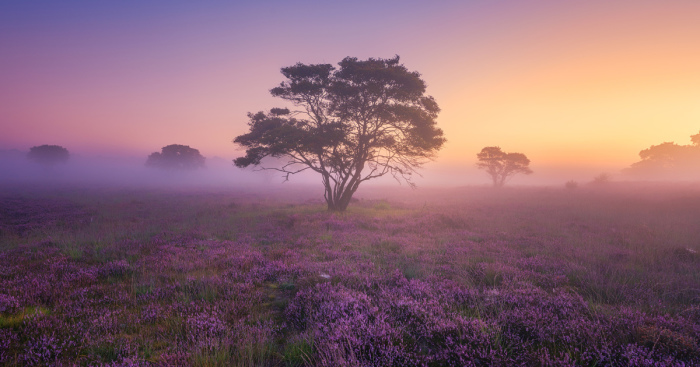
AUGUST

Risultati immagini per  august nature

"Summer is delicious, rain is refreshing, wind braces up, snow is exhilarating; there is no such thing as bad weather, only different kinds of good weather."
John Ruskin


Thursday, 18 July 2019

COMMEMORATING JANE AUSTEN


Today is the 202nd anniversary of English novelist Jane Austen's death. She died in Winchester on 18 July 1817. She was only 41.

She was one of the first writers to pitch for women’s education and emancipation. With the publications of Sense and Sensibility (1811), Pride and Prejudice (1813), Mansfield Park (1814) and Emma (1816), she achieved success as a published writer. Her novels belong to the romantic genre, however, her heroines (Elizabeth Bennet, Emma) were shown to resist and reject patriarchy, ingrained in society. Oxford professor Helena Kelly said Jane Austen was not afraid to deal with touchy contemporary political and religious issues. That includes colonialism and the Church’s role in society, at a time (late 18th/early 19th century Britain) when they were not issues for public discussion, especially by a woman.
Read more here.

Wednesday, 17 July 2019

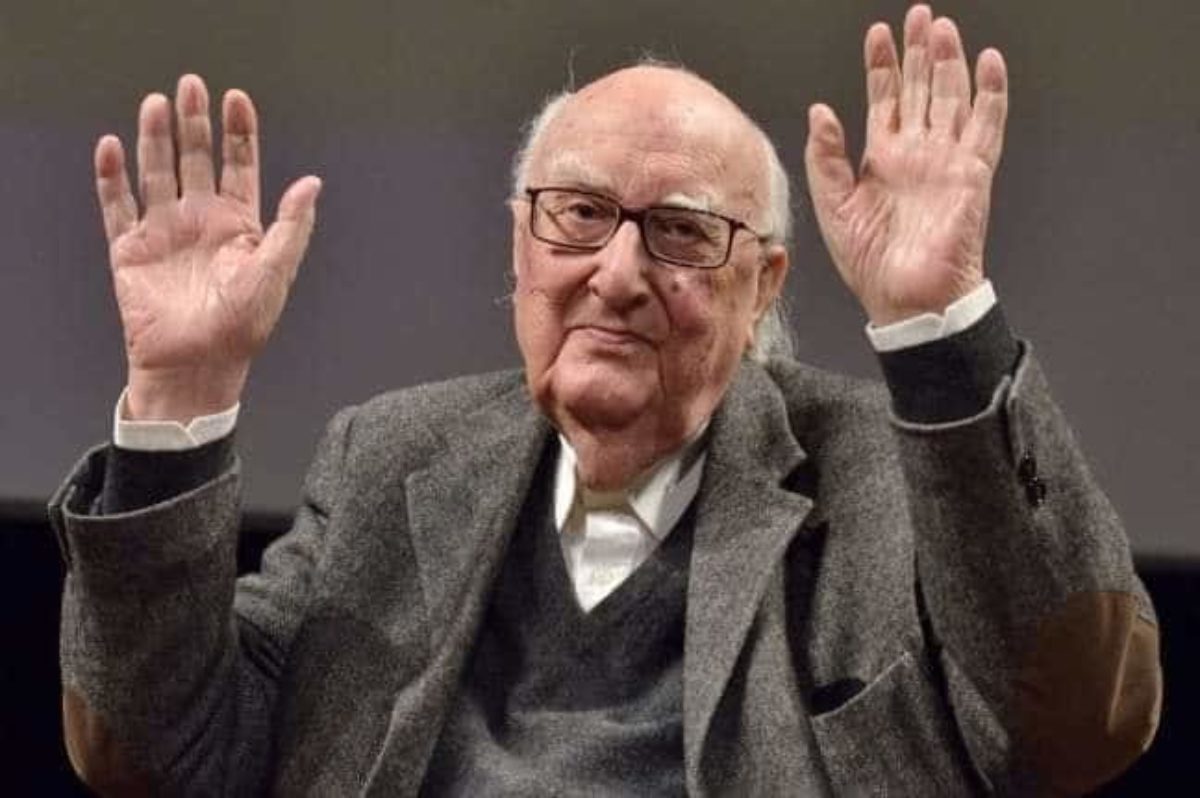
ANDREA CAMILLERI DIES AGED 93

Risultati immagini per camilleri

"The memory of the aged becomes clearer and clearer with time. It has no pity."

Andrea Camilleri, the Sicilian author behind the popular Inspector Montalbano television series, has died aged 93 this morning.  His books won international acclaim and changed perceptions of Sicily. Read here.


Monday, 8 July 2019

PERCY BYSSHE SHELLEY


Risultati immagini per cimitero acattolico roma

Risultati immagini per cimitero acattolico roma

Immagine correlata

Immagine correlata

On 8 July 1822, the English poet Percy Bysshe Shelley died in the Tyrrhenian Sea. He was sailing back from Livorno, where he had met with Leigh Hunt, who had come from England to help with the publication of a radical journal, "The Liberal", to which Byron was also going to contribute. It is likely that an unexpected storm took Shelley by surprise, together with his friend Edward Williams and a boatboy, none of whom were particularly experienced in navigation. When Shelley's body was washed ashore and found on the beach at Viareggio, it was cremated following a quarantine, and his ashes buried at the Non-Catholic Cemetery in Rome. On his gravestone there is a Latin inscription "Cor Cordium", Heart of Hearts, and a passage from Ariel's song in The Tempest, a reference to the circumstances of his death:
"Nothing of him that doth fade,
But doth suffer a sea-change 
Into something rich and strange."


Tuesday, 2 July 2019

REVISING ERNEST HEMINGWAY - 5^C LINGUISTICO

Immagine correlata

Born on July 21, 1899, in Cicero (now in Oak Park), Illinois, Ernest Hemingway served in World War I and worked in journalism before publishing his story collection In Our Time. He was renowned for novels like The Sun Also RisesA Farewell to ArmsFor Whom the Bell Tolls, and The Old Man and the Sea, which won the 1953 Pulitzer. In 1954, he  won the Nobel Prize. He committed suicide on July 2, 1961, in Ketchum, Idaho.
Here you can find my previous post on Ernest Hemingway and his works.

Monday, 1 July 2019

JULY

Immagine correlata

"To see the Summer Sky 
Is Poetry, though never in a Book it lie -
True Poems flee"
Emily Dickinson