Showing posts with label Oscar Wilde. Show all posts

Wednesday, 8 April 2020

THE DUALITY OF MAN

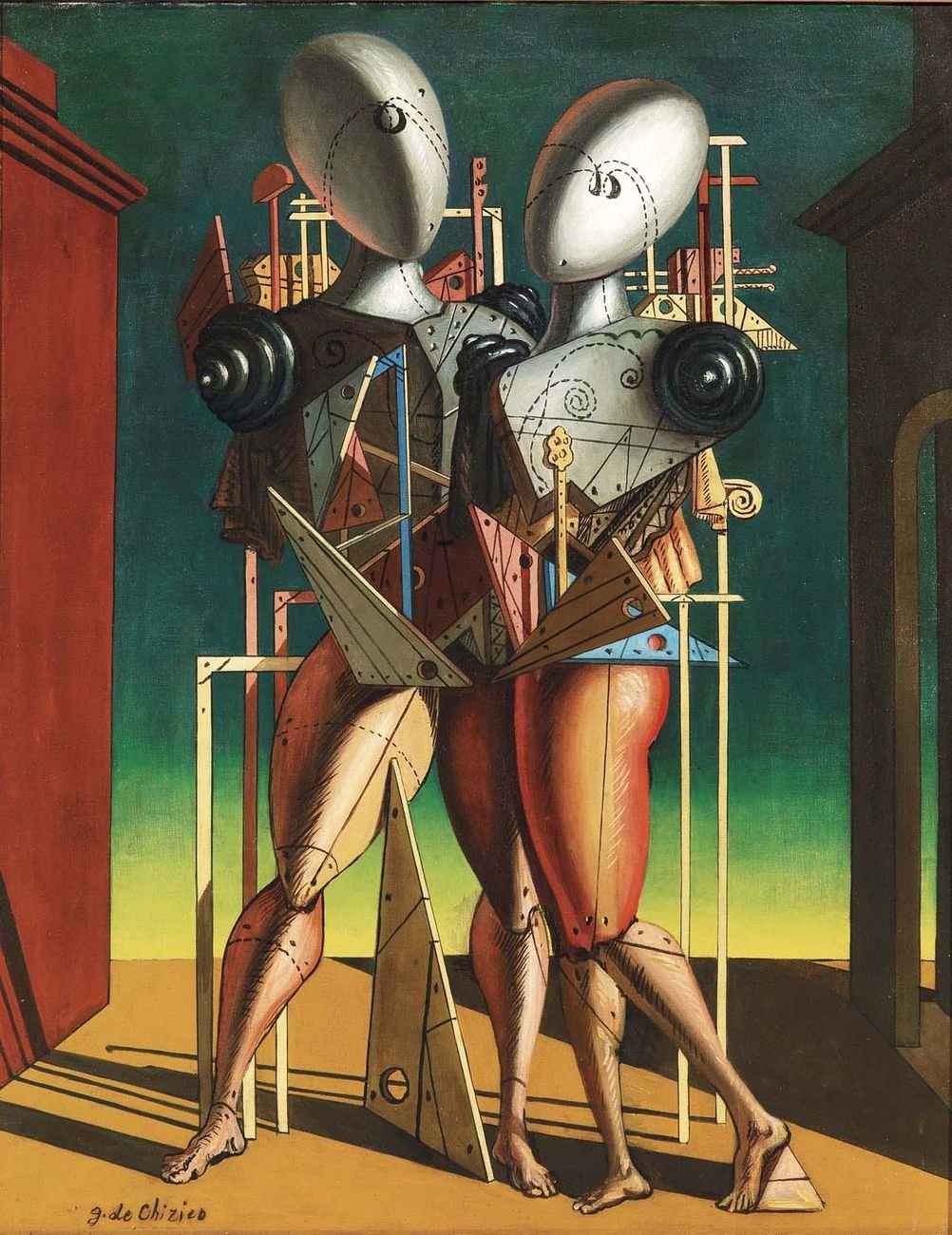
Giorgio de Chirico, Ettore e Andromaca, 1950. Collezione Roberto ...

The idea of a double, or doppelgänger, in literature is a very old concept and one that has brought us many famous works throughout the ages. Doubles are typically used in literature as the kind of "evil twin" of the protagonist (as in Dostoyevsky’s The Double), however the concept can also be used to link two characters together that share the same characteristics and values (as in Virginia Woolf’s Mrs. Dalloway).  Read here.


Friday, 6 March 2020

THE CANTERVILLE GHOST

Risultato immagini per the canterville ghost

The Otis family from the USA have decided to move to England, to Canterville Chase. They soon discover that the house is haunted by the ghost of Sir Simon. A mix of mystery and irony, The Canterville Ghost is one of the Oscar Wilde classics, most loved by children.

Monday, 16 October 2017

HAPPY BIRTHDAY, OSCAR WILDE!


Oscar Wilde was born in Dublin on 16 October 1854. He became involved in the Aesthetic Movement while studying at Magdalen College in Oxford,  and went on to become one of the century’s most brilliant poets, playwrights and essayists. 
He transgressed the oppressive boundaries of Victorian society and lived a full life, even after his reputation was ruined when his sexual orientation came to light. Read here.

Immagine correlata

Thursday, 30 June 2016

THE IMPORTANCE OF BEING EARNEST


Today I recommend watching The Importance of Being Earnest here, the 2002  British-American romantic comedy-drama film based on Oscar Wilde's classic comedy of manners play of the same name.
This play is funny all the time, actually there is nothing earnest about it, at least on the surface! It is a satire of the Victorian era, when a complicated code of behaviour governed everything from communication to sexuality. Regarded by many as Oscar Wilde’s masterpiece, it offers a brilliant commentary on class, money, marriage and morals.
Click here to read the whole play.
Here and here you can find a detailed analysis of the play (plot, characters, themes).

Sunday, 3 April 2016

OSCAR WILDE - 5^C LINGUISTICO


Here  you can find my previous post on Oscar Wilde
Click here to download a helpful PDF presentation. 


"It was his beauty that had ruined him, his beauty and the youth that he had prayed for. But for those two things, his life might have been free from stain. His beauty had been to him but a mask, his youth but a mockery. What was youth at best? A green, an unripe time, a time of shallow moods, and sickly thoughts. Why had he worn its livery? Youth had spoiled him."

Thursday, 11 April 2013

THE BALLAD OF READING GAOL

Reading Gaol, Where Oscar Wilde Was Imprisoned, Unlocks Its Gates ...

The Ballad of Reading Gaol (English word for jail) is not the work that Oscar Wilde wrote while imprisoned for moral (in his case, homosexual) offences in 1895; that work was De Profundis, published five years after his death, in 1905. 

The Ballad of Reading Gaol was written after his release and in France, in 1897;  it was first published in 1898, simply under his prisoner identification number, C.3-3.          
The poem was written in memory of Royal House Guards trooper Charles Thomas Wooldridge who died in Reading prison in July 1896 and it traces the feelings of an imprisoned man towards a fellow inmate who is to be hanged .  They are "like two doomed ships that pass in storm", and Oscar Wilde creates a solemn tone in his rhyme made sad and familiar by certain repeated phrases "each man kills the thing he loves", "the little tent of blue/ Which prisoners call the sky.”  The narrator’s emotions are filtered through an uncertainty about the law that has condemned them, although he is certain that they are joined together in sin.  
While Oscar Wilde is focusing on the story of the execution of  the soldier for the brutal murder of his lover, he is also meditating on injustice, betrayal, and the need for prison reform  –  the  ballad is  a condemnation of  the death penalty and the whole penal system in Victorian England,  but it is much more than a protest poem. It is a powerful accusation of social hypocrisy which condemns some individuals,  but does not deal with the violence and despair that underlie many people’s  lives   -  only the weak are punished for their crimes.
To denounce the indifference of the law to man's anguish, the poet  chooses as his subject the outcast among the outcasts, the prisoner who has inexplicably  killed "the thing he loved"  - this human being is the symbol of  the universality of  guilt and moral weakness as well as of the criminal, the outcast, the artist.

Here  you can read the whole poem. 
Read here a very interesting article.


Now you can download a detailed analysis  of the ballad and a worksheet  about the first part of the poem.
Sunday, 7 April 2013

THE AESTHETIC MOVEMENT

Related image

Here you can download a Powerpoint Presentation and a mind map of the Aesthetic Movement. 
I hope you will find them both helpful!

Sunday, 19 August 2012

THE SELFISH GIANT


READING  ACTIVITY
Oscar Wilde's classic children's tale is about how a selfish giant's life is transformed by the arrival of a special child who teaches him about love and friendship.


It was a large lovely garden, with soft green grass. Here and there over the grass stood beautiful flowers like stars, and there were twelve peach-trees that in the spring-time broke out into delicate blossoms of pink and pearl, and in the autumn bore rich fruit. The birds sat on the trees and sang so sweetly that the children used to stop their games in order to listen to them. “How happy we are here!” they cried to each other.
One day the Giant came back. He had been to visit his friend the Cornish ogre, and had stayed with him for seven years. After the seven years were over he had said all that he had to say, for his conversation was limited, and he determined to return to his own castle. When he arrived he saw the children playing in the garden.
“What are you doing here?” he cried in a very gruff voice, and the children ran away.

Sunday, 29 April 2012

OSCAR WILDE

Oscar Wilde was a declared  aesthete (= someone who loves and appreciates works of art and beautiful things) who professed  his views  both in his  works and way of life. His extravagant look and public behaviour aimed at defying the self-satisfied respectability and cheap taste of the Victorian middle and upper classes, their prudery (=moralism) regarding morals, sex, art and their obsession  with status and  money. His views were strongly influenced by  the art critic William Pater, who asserted  the priority of  art and beauty  in individual  and  social life  and the independence of art from  any   moral, political or utilitarian  purpose, that is  the aesthetic doctrine of "art for art's sake"  (i.e., art has no aim but its own  perfection).                                              
Such devotion to the aesthetic-decadent creed was counterbalanced by  the  moral concern,  present  in  all his works,  exposing  contemporary evils.  In fact,  his comedies are only apparently superficial, as they make fun of Victorian moralism (=strictness and austerity especially in matters of religion or conduct), hypocrisy and prejudices in a light, witty  style. Oscar Wilde possessed a deep sense of humanity and  he developed great concern for the outcast, who were secluded from the safe and optimistic world of rich Victorians; the terrible experience of imprisonment - he was  arrested for “gross indecency with men,” a charge for which he was convicted and sentenced to two years in prison - made his sympathy more intense, as emerges from the long poem The Ballad of Reading Gaol (1898), which contains some very touching lines.  Between January and March 1897, close to the end of his imprisonment, he wrote De  Profundis, a long letter addressed to his lover, Lord Alfred Douglas, published posthumously in 1905. Oscar Wilde spent the last three years of his life in exile. He died at the age of 45 and was buried in Paris.
A contradictory  personality  and versatile (=skillful) artist, Oscar Wilde never enjoyed much favour among contemporary  critics. Only in the course of the 20th  century  he came to be considered  an outstanding  man of letters for the sharp analysis of his time, the skillful (= masterly)  use of the most  different  genres and his brilliant style.