
Showing posts with label Charlotte Brontë. Show all posts
Showing posts with label Charlotte Brontë. Show all posts
Friday, 22 March 2024

Wednesday, 16 June 2021
BERTHA MASON IN JANE EYRE

Bertha Mason is a complex presence in Jane Eyre. She impedes Jane’s happiness, but she also catalyses the growth of Jane’s self-understanding. The mystery surrounding Bertha establishes suspense and terror to the plot and the atmosphere. Further, Bertha serves as a reminder of Rochester’s youthful libertinism (=the behavior of a libertine, a person who is unrestrained by convention or morality, one leading a dissolute life).
Yet Bertha can be
interpreted as a symbol. Some critics have read her as a statement about the
way Britain feared and psychologically “locked away” the other cultures it encountered
at the height of its imperialism. Others have seen her as a symbolic representation
of the “trapped” Victorian wife, who is expected never to travel or work
outside the house and becomes ever more frenzied as she finds no outlet for her
frustration and anxiety. Within the story, then, Bertha’s insanity could serve
as a warning to Jane of what complete surrender to Rochester could bring about.
Wednesday, 21 April 2021
HAPPY BIRTHDAY, CHARLOTTE BRONTË!

Charlotte Brontë, pseudonym Currer Bell, was born 21 April 1816, in Thornton, Yorkshire, England. Read here.
She is best known for her passionate novel Jane Eyre (1847), the story of an independent young governess who is in conflict with her natural desires and social condition, but she overcomes hardships while remaining true to her principles. It blended moral realism with Gothic elements. The novel gave new truthfulness to Victorian fiction. She later wrote Shirley (1849) and Villette (1853).
https://www.litcharts.com/lit/jane-eyre
Sunday, 28 March 2021
WATCHING JANE EYRE

Jane Eyre is a 2006 television adaptation
of Charlotte Brontë's 1847 novel of the same name. The story, which has been the subject of numerous
television and film adaptations, is based on the
life of the orphaned title character.
A young governess falls in love with her brooding and tormented master. However, his dark past may destroy their relationship forever.
Here you can read Charlotte Brontë's novel online.
https://ling.online/en/videos/serials/jane-eyre/
Sunday, 18 March 2018
THE BRONTË SISTERS

Emily Brontë is best known for authoring the novel Wuthering Heights (1847) which received wide critical and commercial acclaim. She was the sister of Charlotte and Anne Brontë, also famous authors. Read here.
Charlotte Brontë became
identified in the public mind as the author of the popular novel Jane Eyre (1847), a strong
narrative of a woman in conflict with her natural desires and social condition.
The novel gave new truthfulness to Victorian fiction. She later wrote Shirley (1849) and Villette (1853). Read here.
Anne Brontë was the youngest member of the Brontë literary family. She wrote two novels: Agnes Grey, based upon her experiences as a governess, was published in 1847; her second and last novel, The Tenant of Wildfell Hall, which is considered to be one of the first sustained feminist novels, appeared in 1848. Read here.
Thursday, 21 July 2016
REVISING JANE EYRE
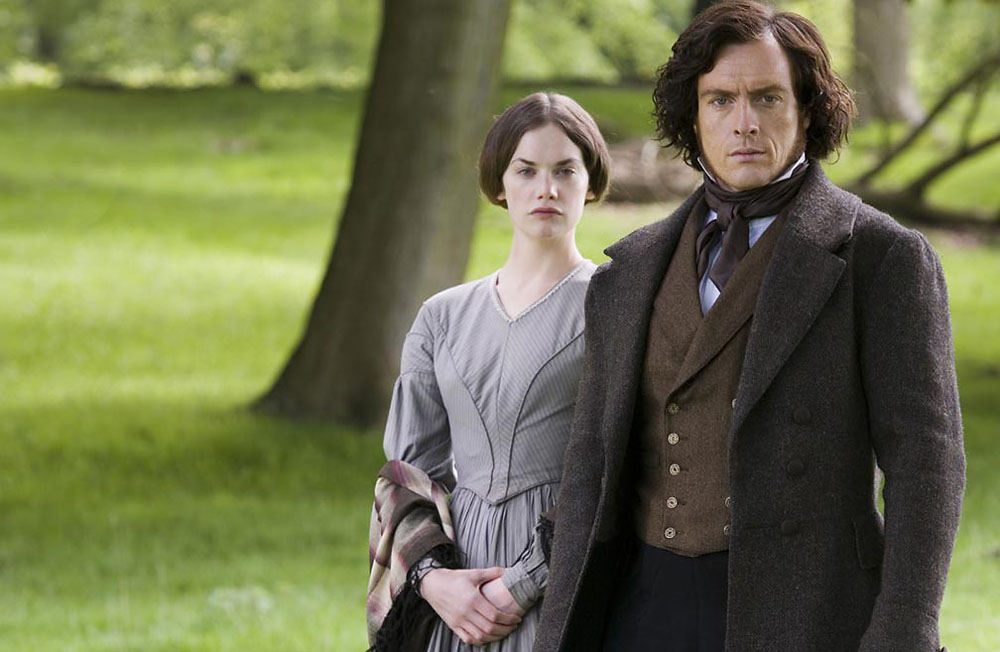
Jane Eyre was Charlotte Brontë’s second novel, but the first to be
published. The first, The Professor, was rejected several times by the publishers and was published
posthumously. Jane Eyre, on the other
hand, was accepted at once, favourably reviewed and recognised as something new
in English fiction - it used traditional conventions in a very
personal way. The strong autobiographical element is what typifies all her work
and this novel in particular. In fact, Charlotte Brontë’s fiction is best understood in the light of
her personal background, as it is essentially
the expression of her passionate
temper and the imaginary world in
which she lived. The first-person narrator, who in 18th-century
fiction was used to add the realism of narration, is used by Charlotte Brontë to convey personal feelings in order that the narrator becomes directly
identified with the author. This accounts
for the emotional use of language and reveals the strength of Charlotte
Brontë’s feelings and her interest in the nature of human relationships. She also employed
Gothic conventions in a personal way, not just for the sake of arousing a sense
of horror, but as a means of evoking feelings. The handling of
nature serves the same purpose. The emotional use of language, the symbolic handling of nature and
the projection of personal feelings are features typical of Romantic poetry,
but they appear for the first time in
serious fiction in the novels of Charlotte Brontë. The Romantic aspect
is also evident in the male protagonist of Jane Eyre
- Rochester is a typical Byronic
hero. Despite his stern manner and not particularly handsome appearance, he is very attractive to women, but
restless and moody and with something
mysterious about his past.
You can read The Guardian review here.Here you can read the novel.

"Women are supposed to be very calm generally: but women feel just as men feel; they need exercise for their faculties, and a field for their efforts as much as their brothers do; they suffer from too rigid a restraint, too absolute a stagnation, precisely as men would suffer; and it is narrow-minded in their more privileged fellow-creatures to say that they ought to confine themselves to making puddings and knitting stockings, to playing on the piano and embroidering bags."
Charlotte Brontë
Tuesday, 31 March 2015
COMMEMORATING CHARLOTTE BRONTË
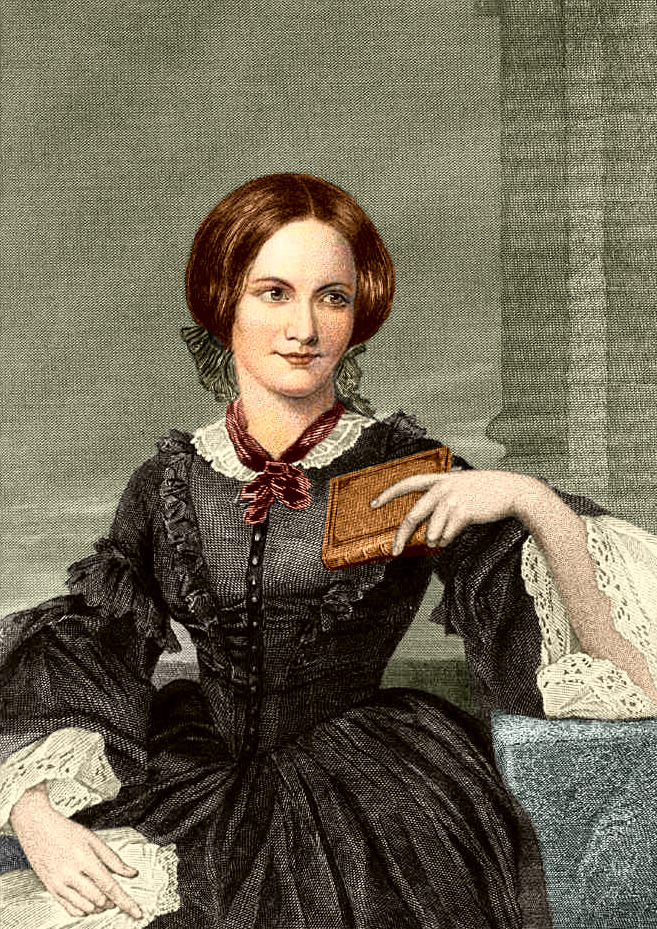
Charlotte Brontë, the
last surviving child of her family, died aged 38 and pregnant on 31
March 1855 (Easter Saturday) in Haworth.
Click here to read her most famous novel, Jane Eyre, online.
I am neither a man nor a woman but an author.
Charlotte Brontë
Monday, 21 April 2014
CHARLOTTE BRONTË

Charlotte Brontë was born on 21 April 1816,
the third daughter of Reverend Patrick
Subscribe to:
Posts (Atom)