
Showing posts with label The Modern novel. Show all posts
Showing posts with label The Modern novel. Show all posts
Saturday, 6 June 2026

Thursday, 21 May 2026

Sunday, 2 February 2025
STUDYING VIRGINIA WOOLF - 5^C LINGUISTICO

Virginia Woolf (1882-1941) was an English novelist, essayist, biographer, and feminist. She was a prolific writer, whose modernist style changed with each new novel. Her letters and memoirs reveal glimpses of Virginia Woolf at the center of English literary culture during the Bloomsbury era. She represents a historical moment when art was integrated into society, as T.S. Eliot describes in his obituary for Virginia. “Without Virginia Woolf at the center of it, it would have remained formless or marginal … With the death of Virginia Woolf, a whole pattern of culture is broken.” Read here.
Tuesday, 21 May 2024
VIRGINIA WOOLF - 5^C LINGUISTICO

Virginia Woolf was a well-known English writer in the 20th century. She was best-known for her novels, but she was also a writer of essays, biographies, letters, and diaries. Her writing fell into the Modernist Movement, which was a literary movement that took place between World War I and World War II.
https://www.iispandinipiazza.edu.it/wp/wp-content/uploads/2020/04/virginia-woolf.pdf
Saturday, 27 May 2023
VIRGINIA WOOLF

“When you consider things like the stars, our affairs don’t seem to matter very much, do they?”
Virginia Woolf is recognised as one of the most innovative writers of the 20th century. Perhaps best known as the author of Mrs Dalloway (1925) and To the Lighthouse (1927), she was also a prolific writer of essays, diaries, letters and biographies. Both in style and subject matter, her work captures the fast-changing world in which she was working.
Wednesday, 19 June 2019
EXPLORING THE VIRGINIA WOOLF BLOG

This website is a resource for Virginia Woolf fans all over the world.
The goal of the Virginia Woolf Blog is to
celebrate her life and work and give readers a clearer understanding of
what she was really like. Using passages from her diaries, letters and
various biographies, the blog aims to show readers the real Virginia Woolf, not
the tragic figure many people see her as.
Thursday, 2 August 2018
THE MODERN NOVEL

Here you can
find an introduction to the Modern novel.
Here
are some interesting websites about Modernism and the Modern novel:
Monday, 11 June 2018
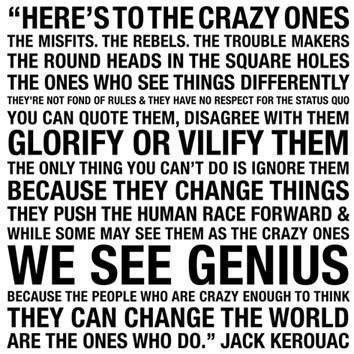
JACK KEROUAC
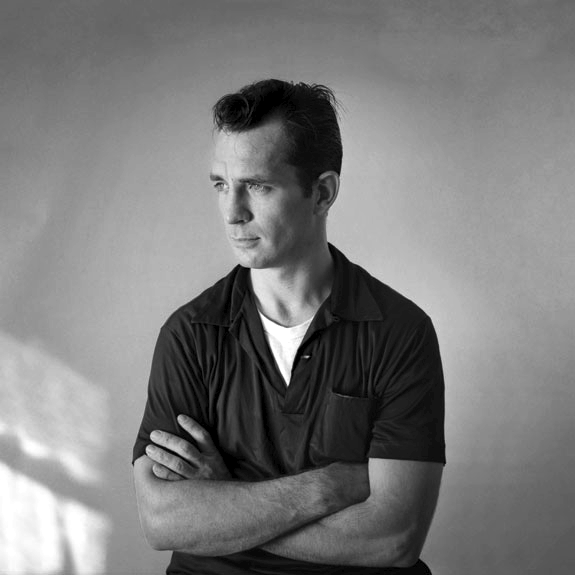
Here you can read about Jack Kerouac, a pioneer of the Beat
Generation.
His
method was greatly influenced by the prolific explosion of Jazz, especially the Bebop genre established by Charlie Parker and others. Later, Kerouac included ideas he developed
from his Buddhist studies.
He often referred to his style as "spontaneous prose." Although
his prose was spontaneous and supposedly without edits, he primarily
wrote autobiographical novels based upon
actual events from his life and the people with whom
he interacted. An often overlooked literary influence on Kerouac was James Joyce, whose work he
alluded to more than any other author. Kerouac had high esteem for Joyce
and he often used Joyce's stream-of-consciousness technique. He admired Joyce's
experimental use of language, as seen in his novel Visions of Cody,
which uses an unconventional narrative as well as a multiplicity of authorial
voices.
Here you can find a PDF presentation on this controversial American novelist and his most famous book, On the Road.
Sunday, 27 May 2018
VIRGINIA WOOLF - 5^C LINGUISTICO

Embracing
formal innovations like stream-of-consciousness and narrative fragmentation, Virginia Woolf’s writing expanded the boundaries of modern
fiction, reshaping our ideas about the ability of the novel to represent
ordinary life and record swift, historical change. “Let us record the atoms as
they fall upon the mind in the order in which they fall,” she advised,
referring to her experimental prose capable of linking the apparently insignificant
and immediate facts of daily life (shifts in mood, quotidian interactions,
sensations, and judgements) to broader social events (war, patriarchy,
technological developments, environmental transformations, and artistic
renovations).
Read
here.
Friday, 26 May 2017

Subscribe to:
Posts (Atom)