
Showing posts with label 5^C Linguistico. Show all posts
Showing posts with label 5^C Linguistico. Show all posts
Saturday, 6 June 2026

Thursday, 21 May 2026

Tuesday, 19 May 2026
GEORGE ORWELL - 5^C LINGUISTICO

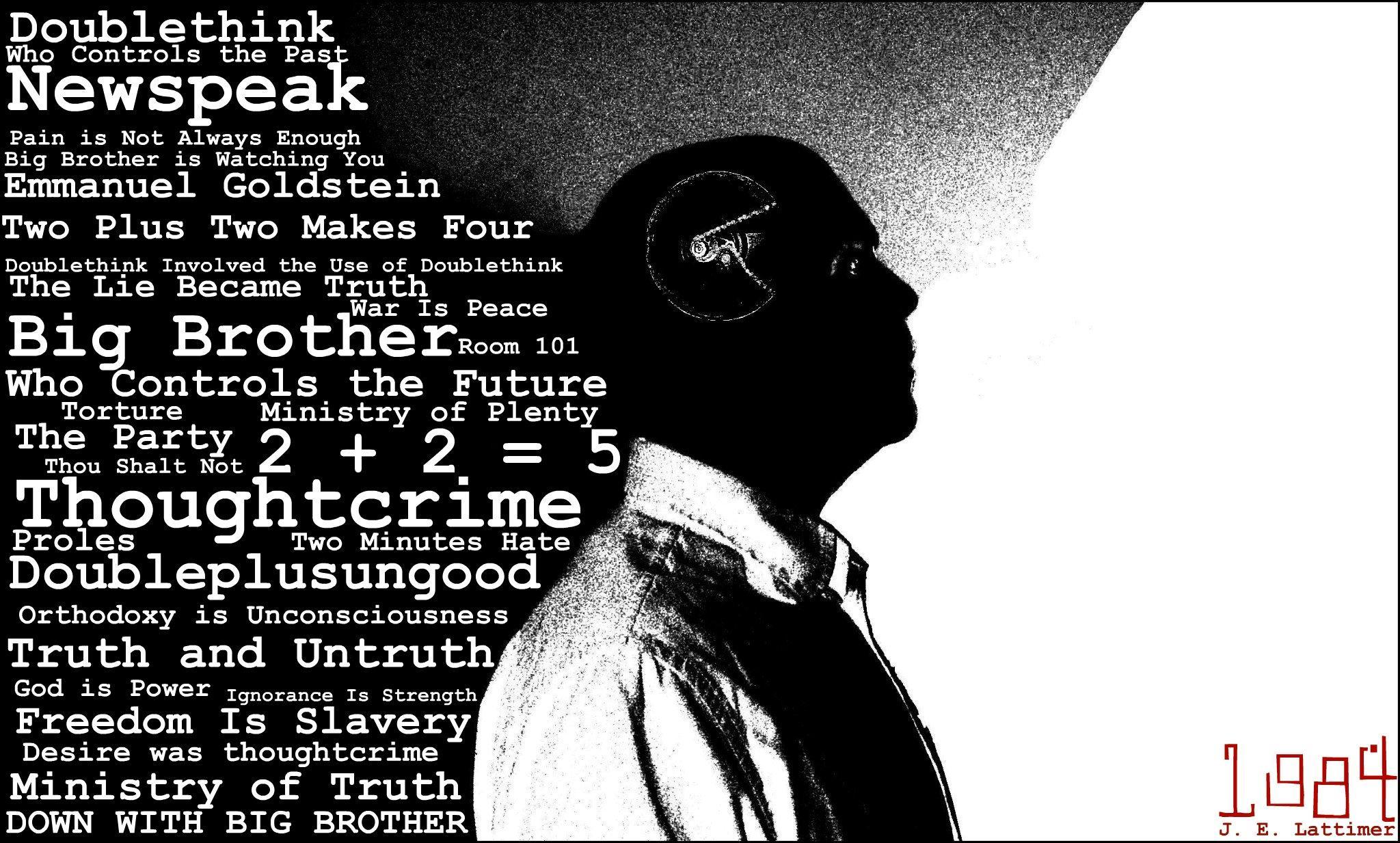
George Orwell was born Eric Arthur Blair on 25 June 1903 in eastern India, the son of a British colonial civil servant. He was educated in England and, after he left Eton, joined the Indian Imperial Police in Burma, then a British colony. He resigned in 1927 and decided to become a writer. In 1928, he moved to Paris where lack of success as a writer forced him into a series of menial jobs. He described his experiences in his first book, Down and Out in Paris and London, published in 1933. He took the name George Orwell, shortly before its publication. This was followed by his first novel, Burmese Days, in 1934.
An anarchist in
the late 1920s, by the 1930s he had begun to consider himself a socialist. In
1936, he was commissioned to write an account of poverty among unemployed
miners in northern England, which resulted in The Road to Wigan Pier (1937).
Late in 1936, Orwell travelled to Spain to fight for the Republicans against
Franco's Nationalists. He was forced to flee in fear of his life from
Soviet-backed communists who were suppressing revolutionary socialist
dissenters. The experience turned him into a lifelong anti-Stalinist.
Between 1941 and
1943, Orwell worked on propaganda for the BBC. In 1943, he became literary
editor of The Tribune, a weekly left-wing magazine. By now he was a prolific
journalist, writing articles, reviews and books.
In 1945,
Orwell's Animal Farm was published. A political fable set in a
farmyard, but based on Stalin's betrayal of the Russian Revolution, it made
Orwell's name and ensured he was financially comfortable for the first time in
his life. Nineteen Eighty-Four was published four years later.
Set in an imaginary totalitarian future, the book made a deep impression, with
its title and many phrases - such as "Big Brother is watching you", "newspeak" and "doublethink" - entering popular use. By now Orwell's health was
deteriorating and he died of tuberculosis on 21 January 1950.
Saturday, 7 February 2026
INSIGHT INTO THE VICTORIAN AGE - 5^C LINGUISTICO


The Victorian period in
Great Britain (1837-1901) was one of political stability, huge
industrial and technological change, major economic development, prosperity,
optimism and faith in progress as well as poverty and social unrest, shocking
divisions between the rich and the poor, and grand attempts to combat squalor
and disease.
Click here to download a PDF presentation.
Saturday, 24 January 2026
JANE AUSTEN'S PRIDE AND PREJUDICE

Pride and Prejudice is one of the most popular novels in the English language. Over 200 years after its publication, it continues to win the hearts and minds of readers around the world, thanks to its delightful heroine, unforgettable cast of comic characters, witty dialogue, and satisfying romantic plot.
Read here.
Tuesday, 6 January 2026
STUDYING A CHRISTMAS CAROL - 3^C LINGUISTICO

Charles Dickens’s A Christmas Carol, published on 19 December 1843, met with instant success and critical acclaim. It tells
the story of a bitter old miser named Ebenezer Scrooge and his
transformation into a gentler, kindlier man after visitations by the ghost of
his former business partner Jacob Marley and
the Ghosts of Christmas Past, Present and Yet to Come.
After celebrating the
joy and charity of Christmas, A Christmas Carol is above all a
condemnation of 19th-century Victorian England's division between the rich and the poor. London was a great world power, rich from industry and colonial
influence, yet poverty devastated its streets and factories. Continue reading here.
Sunday, 4 January 2026
BRIGHT STAR - 5^C LINGUISTICO

"Bright Star" is a sonnet written by the Romantic poet John Keats as a homage to his beloved Fanny Brawne.
It is primarily made up of two analogies. The first analogy is a negative one, where the poet describes the aspect of the star that he doesn’t wish to resemble. The second analogy is a positive one, where the poet explains the aspect of the star that he aspires to be like — namely, steadfast loyalty to his beloved.
https://www.eminentediting.com/post/bright-star-by-john-keats-analysis
Thursday, 18 December 2025
LORD BYRON - 5^C LINGUISTICO

George Gordon Noel, 6th Baron Byron (1728-1844)
with his aristocratic behaviour, personal charm and unquestionable beauty stands
out as a rock star poet and the prince of passionate people’s perceptions during the so-called Regency era in England (1792 –
1830).
He is an immense poet, combining the best of
Augustan wit and intellect with the best of sensuously and politically charged
Romanticism.
Lord Byron was described in his own time as ‘a child of passion and the fool of fame‘.
Lord Byron was described in his own time as ‘a child of passion and the fool of fame‘.
Monday, 15 December 2025
JANE AUSTEN'S 250TH BIRTHDAY

Jane Austen, novelist, observer of human nature, and enduring voice of wit, romance, and social insight, was born in Steventon, Hampshire, England on 16 December 1775 and birthday celebrations have been taking place across the United Kingdom and the United States for months. Here are some ways to celebrate the birth of one of England's most beloved authors.
Why we love Jane Austen more than ever after 250 years
Why I Love Jane Austen (And Why You Should Too)
Sunday, 14 December 2025
JANE AUSTEN AND THE NOVEL OF MANNERS - 5^C LINGUISTICO

Jane Austen’s novels are unrivalled for their success in
combining two sorts of excellence that all too seldom coexist. Meticulously
conscious of her artistry, she is also constantly attentive to the realities of
ordinary human existence. From the
first, her works unite subtlety and common sense, good humour and acute moral
judgment, charm and conciseness, deftly marshalled incidents and carefully
rounded characters.
Jane Austen’s critics have spoken of her as a “limited” novelist, one who, writing in an age of great men and important events, portrays small towns and petty concerns, who knows (or reveals) nothing of masculine occupations and ideas, and who reduces the range of feminine thought and deed to matrimonial scheming and social pleasantry. Read here.
Thursday, 16 October 2025
ROMANTICISM - 5^C LINGUISTICO

"The heart is the only true source of art, the language of a pure, child-like soul. Any creation not sprung from this origin can only be artifice. Every true work of art is conceived in a hallowed hour and born in a happy one, from an impulse in the artist's heart, often without his knowledge."
Caspar David Friedrich
Romanticism (also known as the Romantic period) was an artistic, literary, and intellectual movement that originated in Europe toward the end of the 18th century and in most areas was at its peak in the period from 1800 to 1850. It was partly a reaction to the Industrial Revolution, the aristocratic social and political norms of the Age of Enlightenment, and the scientific rationalisation of nature.
Here you can find my previous posts about Romanticism.
Thursday, 18 September 2025

Monday, 21 April 2025
JAMES JOYCE'S DUBLINERS - 5^C LINGUISTICO

Dubliners by James Joyce was first published on 15 June
1914.
Though James Joyce began these
stories of Dublin life in 1904 when he was twenty-two and completed them in 1907,
their unconventional themes and language led to repeated rejections by
publishers and delayed publication until 1914. His story The Dead has come to
be seen as one of the most powerful evocations of human loss and longing that
the English language possesses; all the other stories in Dubliners are
as beautifully turned and as greatly admired. They remind us once again that
James Joyce was not only Modernism’s chief innovator, but also one of its most
intimate and poetic writers.
Wednesday, 12 February 2025
W.H. AUDEN - 5^C LINGUISTICO

English poet, playwright, critic, and librettist Wystan Hugh Auden exerted a major influence on the poetry of the 20th century. He grew up in Birmingham, England and was known for his extraordinary intellect and wit. His first book, Poems, was published in 1930 with the help of T.S. Eliot. Just before World War II broke out, he emigrated to the United States where he met the poet Chester Kallman, who became his lifelong lover. W.H. Auden won the Pulitzer Prize in 1948 for The Age of Anxiety. Much of his poetry is concerned with moral issues and evidences a strong political, social, and psychological context. Read here.
Sunday, 2 February 2025
STUDYING VIRGINIA WOOLF - 5^C LINGUISTICO

Virginia Woolf (1882-1941) was an English novelist, essayist, biographer, and feminist. She was a prolific writer, whose modernist style changed with each new novel. Her letters and memoirs reveal glimpses of Virginia Woolf at the center of English literary culture during the Bloomsbury era. She represents a historical moment when art was integrated into society, as T.S. Eliot describes in his obituary for Virginia. “Without Virginia Woolf at the center of it, it would have remained formless or marginal … With the death of Virginia Woolf, a whole pattern of culture is broken.” Read here.
Tuesday, 10 December 2024
MARY SHELLEY'S FRANKENSTEIN

The monster has always been the true subject of the Frankenstein story, and Kenneth Branagh’s retelling understands that. “Mary Shelley’s Frankenstein” has all of the usual props of the Frankenstein films, brought to a fever pitch: the dark and stormy nights, the lightning bolts, the charnel houses of spare body parts, the laboratory where Victor Frankenstein stirs his steaming cauldron of life. Read here.
https://fsharetv.co/movie/mary-shelley's-frankenstein-episode-1-tt0109836
Friday, 22 November 2024

Saturday, 26 October 2024
THE GOTHIC NOVEL

The first Gothic fiction appeared with
works like Horace Walpole’s Castle of Otranto (1765), Ann
Radcliffe's The Mysteries of Udolpho (1794) and Matthew Gregory Lewis’ The Monk (1796),
which opposed 18th-century “rationalism” with scenes of mystery, horror, and
wonder. Gothic was a designation derived from architecture, and it carried connotations of rough and primitive grandeur.
The atmosphere of a Gothic novel was expected to be dark,
tempestuous, ghostly, full of madness, outrage, superstition, and the spirit of
revenge. Mary Shelley’s Frankenstein, which maintains its original
popularity and even notoriety, has in overplus the traditional Gothic
ingredients, with its weird God-defying experiments and its monster.
Easy targets for satire, the early Gothic romances died
of their own extravagances of plot, but Gothic atmospheric devices continued to haunt the fiction of such major writers as the Brontë
sisters, Edgar Allan Poe, Nathaniel
Hawthorne, and even Charles Dickens in Bleak House and Great
Expectations. In the second half of the 20th century, the term was applied
to paperback romances having the same kind of themes and trappings similar to
the originals.
Gothic fiction asks to be
considered as ingenious entertainment; the pity and terror are not aspects of
a cathartic process, but transient emotions to be enjoyed for their own sake.
Read here.
https://research.dom.edu/gothicliterature/historyandkeyelements
https://www.invaluable.com/blog/elements-of-gothic-literature/
Saturday, 19 October 2024


Subscribe to:
Posts (Atom)