Showing posts with label The 18th century. Show all posts

Tuesday, 13 September 2022

GEORGIAN ENGLAND

The Georgian period saw Britain establish itself as an international power at the centre of an expanding empire. Accelerating change from the 1770s onwards made it the world’s first industrialised nation.
It ran from 1714 to 1837, ending when Queen Victoria ascended to the throne. Read here.

Monday, 27 April 2020

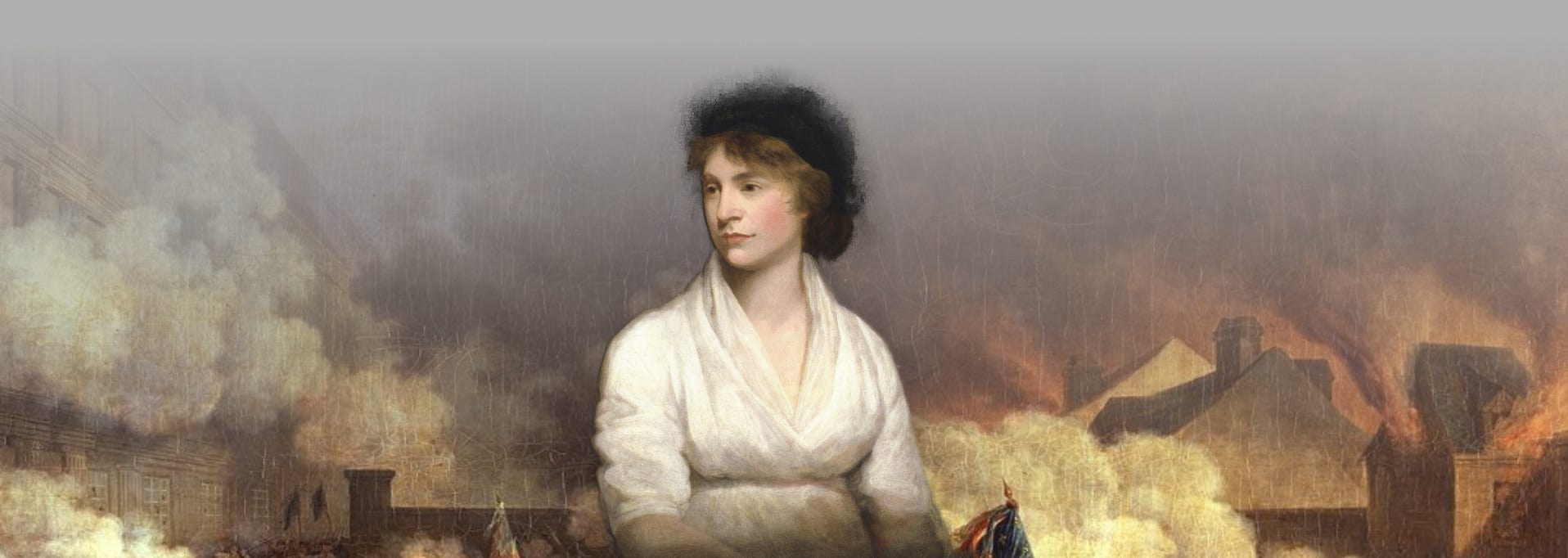
MARY WOLLSTONECRAFT

Mary Wollstonecraft: Champion of the Obvious yet Controversial

Mary Wollstonecraftborn in London on 27 April  1759, was an English writer and passionate advocate of educational and social equality for women. She called for the betterment of women’s status through such political change as the radical reform of national educational systems. Such change, she concluded, would benefit all society. Best known for her Vindication of the Rights of Women (1792), her influence went beyond the substantial contribution to feminism she is mostly remembered for and extended to shaping the art of travel writing as a literary genre and, through her account of her journey through Scandinavia, she had an impact on the Romantic movement.
Read here


Wednesday, 22 April 2020

MADAME DE STAËL

La disparition de Germaine de Staël il y a 200 ans célébrée - rts ...

French writer Madame de Staël was born in Paris on 22 April 1766 as Anne Louise Germaine Necker. She contributed to the diffusion of ideas in Europe through her travels and her Salon, where she received many European intellectuals.
Read here.


Monday, 18 September 2017

WILLIAM HOGARTH AND HIS TIMES


William Hogarth's Gin Lane is one of his best-known works of engraved art. Along with its companion, Beer StreetGin Lane addressed a serious problem in mid-18th century England - the abuse of spirits (= strong alcoholic drinks such as whiskey and gin) by the working classes and the poor. In the right  foreground a skeletal ballad singer has just died. His left hand still clutches his bottle. A drunken woman is taking her snuff while her neglected  baby falls to his death in front of the Gin Royal Tavern. Behind the wall a man and his dog fight for a bone. Further back, a man pawns his coat and saw and his wife her kitchen tools for some more drinks. The pawn broker is properly named, "S. Gripe" (= complaint, affliction). Both his comfortable home and rich clothes stand in contrast to the devastation around. Only pawn brokers, coffin makers and distillers profit in such a society.  Continue to read here.

Friday, 9 June 2017

DANIEL DEFOE'S ROBINSON CRUSOE

Risultati immagini per robinson crusoe

From Shakespeare’s The Tempest  to the film  Cast Away,  starring Tom Hanks, and  the TV series Lost, life on a desert island has always served as an inspiration for writers.

Numerous stories of real life stranded sailors provided inspiration for the most famous castaway of them all, Daniel Defoe’s Robinson Crusoe.

Risultati immagini per robinson crusoe

Robinson Crusoe was a bestseller in 1719, the year it was published.  Epistolary, confessional, and didactic in form, the book is a fictional autobiography of the title character (whose real name is Robinson Kreutznaer),  a castaway who spends 28 years on a remote tropical island near Trinidad, encountering cannibals, captives, and mutineers before being rescued. 
The story was based on the real-life experiences of  Alexander Selkirk, a Scottish castaway who lived for four years on a Pacific island called "Más a Tierra", now part of Chile, which was renamed Robinson Crusoe Island in 1966.

Defoe’s focus on the conditions of everyday life and avoidance of the courtly and the heroic made him a revolutionary in English literature and helped define the new genre of the novel. Stylistically, Defoe was a great innovator. He rejected the ornate style associated with the upper classes  and  used the simple, direct, fact-based style of the middle classes, which became the new standard for the English novel.
With Robinson Crusoe’s theme of solitary human existence, Defoe paved the way for the central modern theme of alienation and isolation.

Here  you can download a PDF Presentation to widen your knowledge of the first real novel in English literature! 

Tuesday, 13 December 2016

SAMUEL JOHNSON


Samuel Johnson was an English writer and critic, and one of the most famous literary figures of the 18th century. His best-known work is his "Dictionary of the English Language".
He died on 13 December 1784 and is buried at Westminster Abbey.

Here is a review of  David Nokes's 2009 biography of Dr Johnson.

Saturday, 20 October 2012

THE MYTH OF THE NATURAL MAN


In the 18th century the discovering of new populations in America, Polynesia, Africa, because of the explorers’ travels around the world, brought around a new vision of the human being. They found whole populations organised in a very different way than the Europeans, with no royal absolutism, without inequalities, without religious  intolerance, without excessive ambitions of profits.  The “myth of the Noble Savage” showed up in the scenario, as a pure being in contact with Nature, not contaminated by  modern society.
Then the whole structure of  European society, based on a system ruled by the Church and the Kingdom, was debated  and  all its rules and moral concepts, considered until  that time as absolutes, were seriously  discussed and criticised. 

Here  you can download a PDF Presentation to improve your knowledge of the "myth of  the Noble Savage".  


Friday, 19 October 2012

THE RISE OF THE NOVEL

The novel originated in the early 18th century after the Italian word "novella", which was used for stories in the medieval period. Its identity has evolved and now a work of prose fiction is at least 50,000 words. Novels focus on character development more than plot. In any genre, it is the study of the human psyche.
The ancestors of the novel were Elizabethan prose fiction and French heroic romances, which were long narratives about contemporary characters who behaved nobly.  The novel came into popular awareness due to a growing middle class with more leisure time to read and money to buy books. Public interest in the human character led to the popularity of autobiographies, biographies, journals, diaries and memoirs.  The early English novels concerned themselves with complex, middle-class characters struggling with their morality and circumstances.

Thursday, 18 October 2012

THE AUGUSTAN AGE


en.wikimedia.orgenwikipedia2

When Queen Anne died without any heirs, the English throne was offered to her nearest Protestant relative, George of Hanover, who thus became George I of England. Throughout the long reign of George, his son, and grandson, all named George, the very nature of English society and the political face of the realm changed. 

In part this was because the first two Georges took little interest in the politics of rule, and were quite content to let ministers rule on their behalf. These ministers, representatives of the king, or Prime Ministers, rather enjoyed ruling, and throughout this "Georgian period" the foundations of English political party system was solidified into something resembling what we have today.

But more than politics changed; English society underwent a revolution in art and architecture. This was the age of the grand country house, when many of the magnificent  homes that we can visit today were built.

Abroad, the English acquired more and more territory overseas through conquest and settlement, lands that would eventually make up an Empire stretching to every corner of the globe.  Read here.

1714 - 1727
Queen Anne  was succeeded by George I of the House of Hanover, who was a descendant of the Stuarts through his maternal grandmother, Elizabeth, daughter of James I.

He was an unpopular king partly because of his attachment to Germany, he didn't speak English  and had no knowledge of British customs.
During George's reign, the powers of the monarchy diminished and Britain began a transition to the modern system of cabinet government led by a Prime Minister.  This laid the foundations for that form of Parliamentary monarchy which has been in existence  in England  ever since.
During his reign, real power was held by the Whigs’ leader,  Sir Robert Walpole,  Britain's first Prime Minister.

1727- 1760
George II  exercised little control over British domestic policy, which was largely controlled by Great Britain's parliament.

During the last years of  his reign, William Pitt the Elder of the Whigs, was appointed Prime Minister. He became famous  as the wartime political leader of Britain in the Seven Years' War, especially for his single-minded devotion to victory over France. Victory made Britain dominant in world affairs.  He was also known for his wide popular appeal, his opposition to corruption in government, his advocacy of British greatness, expansionism and colonialism, and his antagonism toward Britain's chief enemies and rivals for colonial power, Spain and France.