Showing posts with label 2^C Linguistico. Show all posts

Sunday, 4 October 2026

THE SECRET GARDEN


"The Secret Garden"  is a novel by  Frances Hodgson Burnett. It was initially published in serial format beginning in 1910, and was first published in its entirety in 1911.
It is now one of Frances Hodgson Burnett's most popular novels, and is considered to be a classic of English children's literature. 
Here you can find a simplified version of the novel and some activity worksheets here  and here.


Click here to read a book review. Here you can find a  detailed analysis of the novel.


Saturday, 6 November 2021

MOLLY MALONE - 2^C LINGUISTICO


Molly Malone is the enigmatic heroine of the famous song of the same name, widely recognised as Dublin’s unofficial anthem. Immortalised in bronze during the 1988 Dublin Millennium celebrations, the Molly Malone statue stands in the heart of the city’s historic Georgian Quarter.

According to the lyrics of the undeniably catchy tune – also known as Cockles and Mussels – Molly was a young and beautiful fishmonger who sold her yield from a cart on the streets of Dublin. The song’s final verse states that after she died of a fever, she began haunting the city.

Despite her international fame, Molly Malone remains something of a mystery. While a popular figure in Irish folklore, she became an urban legend towards the end of the 20th century when claims that she was a real person who lived in the 17th century became popularised. After a Mary Malone (the name Molly derives from Mary or Margaret) was discovered to have died in Dublin on 13 June 1699, the Dublin Millennium Commission joyously proclaimed 13 June Molly Malone Day, and in 1988, it unveiled her statue.

https://www.irelandbeforeyoudie.com/who-was-molly-malone-what-we-know-from-irish-folklore-and-songs/

Tuesday, 9 June 2020

SUMMER HOMEWORK

Transparent Innertube Clipart - Summer Homework Cover Page, HD Png ...

Finally, summertime is here!
I hope you have a safe and relaxing time while you are on holiday … but don’t forget to do your English homework! Please engage in some grammar and reading activities over the summer.  
All assignments are linked here. 


Tuesday, 28 April 2020

THE LITTLE PRINCE

The Little Prince Final Essay Project | Mr. Ewert's Class

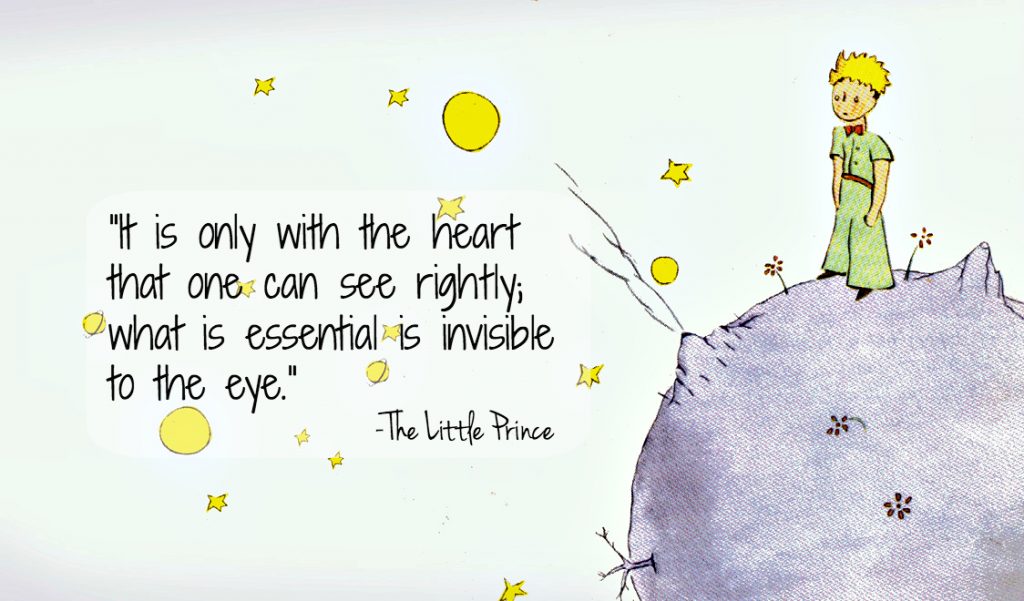
The Little Prince has captured the hearts of readers around the world since he first appeared in 1943. Written by pilot Antoine de Saint-Exupéry while in America, the tale was inspired by his experiences in the French Air Force. On the surface it’s a simple story, but this little prince and his messages of compassion and goodwill continue to endure. The little prince represents the open-mindedness of children. He is a wanderer who restlessly asks questions and is willing to engage the invisible, secret mysteries of the universe. The novel suggests that such curiosity the key to understanding and to happiness.
Here are seven life lessons we can learn from this enchanting tale, as told through quotes.  Read here.


Here you can find a plot summary of this fable and modern classic. 

Tuesday, 31 March 2020

BE GOING TO + INFINITIVE

9º / FUTURE

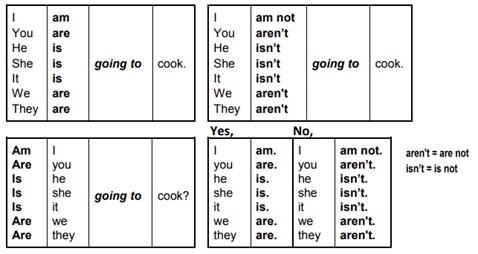
We can express the future with BE GOING TO + infinitive. 

Here are some examples to make sure this is clear:
  • I’m going to see a play tonight. 
  • It's late so I don't think he's going to do his work tonight.
  • Look at those clouds. It's going to rain soon.
  • My favourite team is going to play tomorrow evening.
To form questions, we invert the subject (e.g, I, you) and "is/am/are." If we use a wh- question word, we insert it at the beginning of the sentence:
  • Who is going to read the next paragraph?
  • Are you going to speak at the conference?
  • What is she going to cook for dinner?
  • Are they going to sleep all day?
  • Where is your brother going to sleep when he visits you?

The structure BE GOING TO is normally used to indicate the future but with some type of connection to the present. 
We use it in the following situations:
1. When we intend / plan to do something in the future. 
The decision has been made before the moment of speaking.
  • They're going to retire to the beach - in fact they have already bought a little beach house.
  • I'm going to accept the job offer.
  • Next week I'm going to start a new diet.
  • Are you going to come to my party tomorrow?
2. When there are definite signs that something is going to happen. 
Something is likely to happen based on the evidence or experience you have.
  • I think it is going to rain - I just felt a drop!
  • I don't feel well! I think I'm going to throw up  (= vomit).
  • I got a D on my exam. My parents are going to kill me!
3. When something is about to happen:
  • Get back! The bomb is going to explode.
  • Look out! That car is going to overtake.

Friday, 6 March 2020

THE CANTERVILLE GHOST

Risultato immagini per the canterville ghost

The Otis family from the USA have decided to move to England, to Canterville Chase. They soon discover that the house is haunted by the ghost of Sir Simon. A mix of mystery and irony, The Canterville Ghost is one of the Oscar Wilde classics, most loved by children.

Saturday, 15 December 2018

Saturday, 11 June 2016

Thursday, 6 February 2014

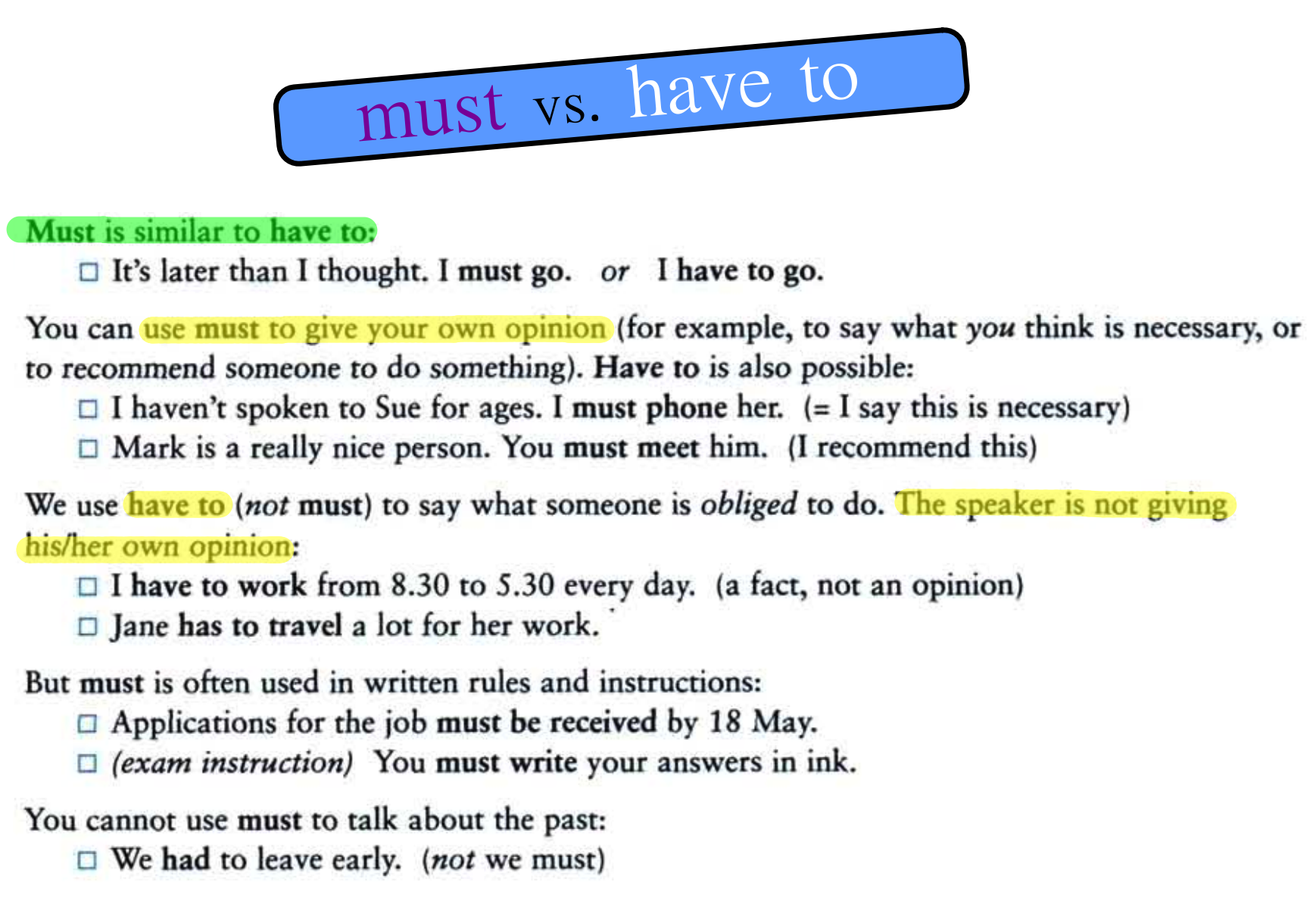
SHOULD, MUST OR HAVE TO?


Here you can download a PDF presentation of these verbs which refer to obligation. Click here to read about their differences.

Now you can do the following exercises: 
Must or Have to
Must or Have to
Must, Mustn’t or Have to
Should
Mustn't or Don't have to