
Showing posts with label The Modern Age. Show all posts
Showing posts with label The Modern Age. Show all posts
Saturday, 6 June 2026

Thursday, 21 May 2026

Tuesday, 19 May 2026
GEORGE ORWELL - 5^C LINGUISTICO

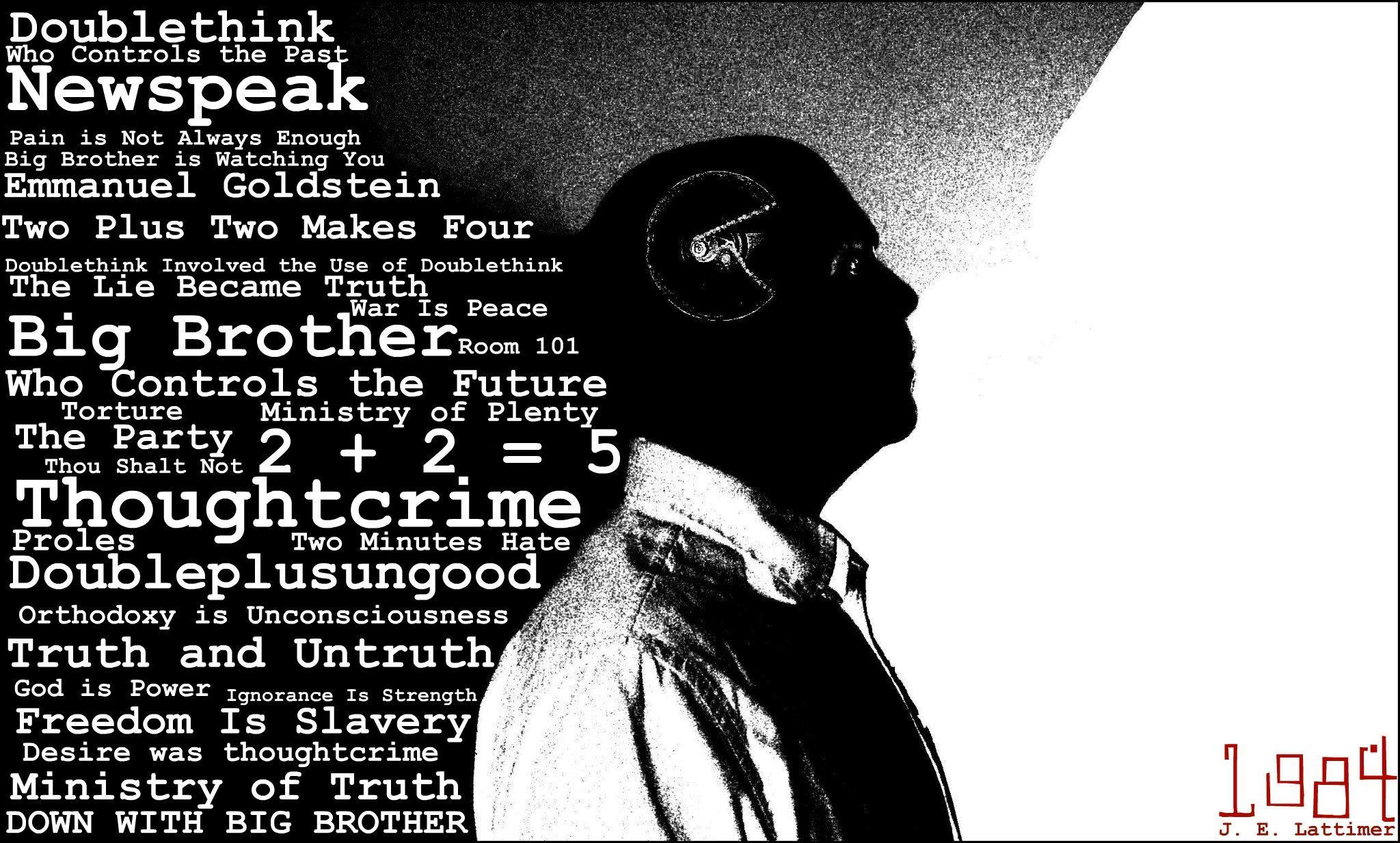
George Orwell was born Eric Arthur Blair on 25 June 1903 in eastern India, the son of a British colonial civil servant. He was educated in England and, after he left Eton, joined the Indian Imperial Police in Burma, then a British colony. He resigned in 1927 and decided to become a writer. In 1928, he moved to Paris where lack of success as a writer forced him into a series of menial jobs. He described his experiences in his first book, Down and Out in Paris and London, published in 1933. He took the name George Orwell, shortly before its publication. This was followed by his first novel, Burmese Days, in 1934.
An anarchist in
the late 1920s, by the 1930s he had begun to consider himself a socialist. In
1936, he was commissioned to write an account of poverty among unemployed
miners in northern England, which resulted in The Road to Wigan Pier (1937).
Late in 1936, Orwell travelled to Spain to fight for the Republicans against
Franco's Nationalists. He was forced to flee in fear of his life from
Soviet-backed communists who were suppressing revolutionary socialist
dissenters. The experience turned him into a lifelong anti-Stalinist.
Between 1941 and
1943, Orwell worked on propaganda for the BBC. In 1943, he became literary
editor of The Tribune, a weekly left-wing magazine. By now he was a prolific
journalist, writing articles, reviews and books.
In 1945,
Orwell's Animal Farm was published. A political fable set in a
farmyard, but based on Stalin's betrayal of the Russian Revolution, it made
Orwell's name and ensured he was financially comfortable for the first time in
his life. Nineteen Eighty-Four was published four years later.
Set in an imaginary totalitarian future, the book made a deep impression, with
its title and many phrases - such as "Big Brother is watching you", "newspeak" and "doublethink" - entering popular use. By now Orwell's health was
deteriorating and he died of tuberculosis on 21 January 1950.
Monday, 21 April 2025
JAMES JOYCE'S DUBLINERS - 5^C LINGUISTICO

Dubliners by James Joyce was first published on 15 June
1914.
Though James Joyce began these
stories of Dublin life in 1904 when he was twenty-two and completed them in 1907,
their unconventional themes and language led to repeated rejections by
publishers and delayed publication until 1914. His story The Dead has come to
be seen as one of the most powerful evocations of human loss and longing that
the English language possesses; all the other stories in Dubliners are
as beautifully turned and as greatly admired. They remind us once again that
James Joyce was not only Modernism’s chief innovator, but also one of its most
intimate and poetic writers.
Wednesday, 12 February 2025
W.H. AUDEN - 5^C LINGUISTICO

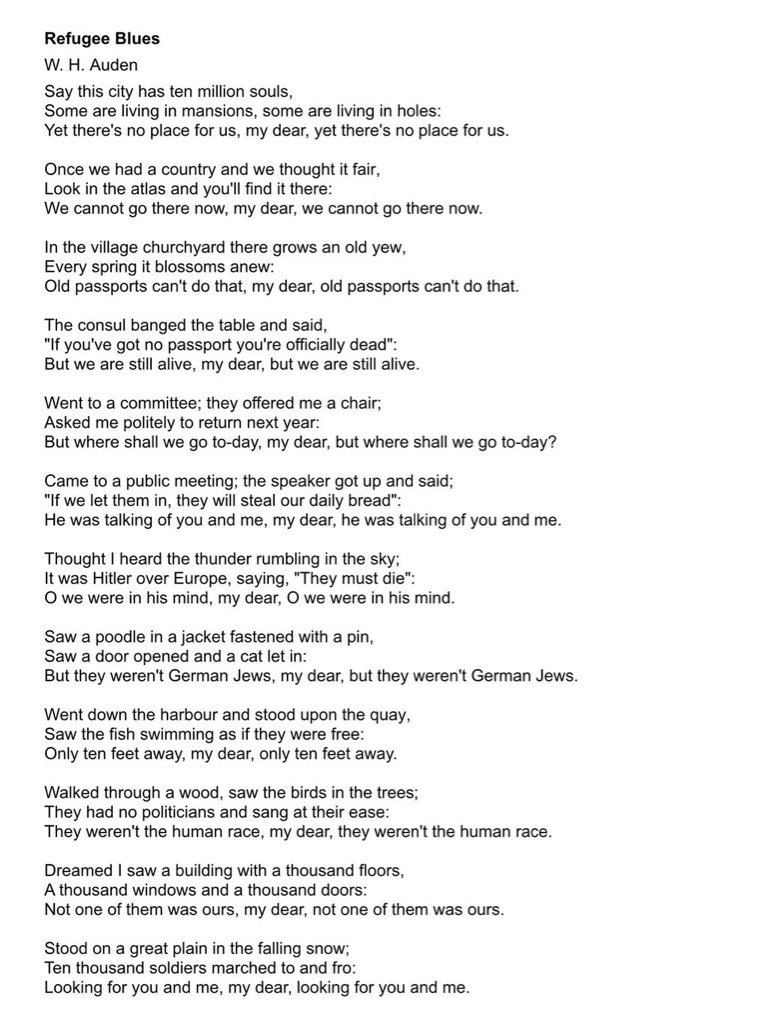
English poet, playwright, critic, and librettist Wystan Hugh Auden exerted a major influence on the poetry of the 20th century. He grew up in Birmingham, England and was known for his extraordinary intellect and wit. His first book, Poems, was published in 1930 with the help of T.S. Eliot. Just before World War II broke out, he emigrated to the United States where he met the poet Chester Kallman, who became his lifelong lover. W.H. Auden won the Pulitzer Prize in 1948 for The Age of Anxiety. Much of his poetry is concerned with moral issues and evidences a strong political, social, and psychological context. Read here.
Sunday, 2 February 2025
STUDYING VIRGINIA WOOLF - 5^C LINGUISTICO

Virginia Woolf (1882-1941) was an English novelist, essayist, biographer, and feminist. She was a prolific writer, whose modernist style changed with each new novel. Her letters and memoirs reveal glimpses of Virginia Woolf at the center of English literary culture during the Bloomsbury era. She represents a historical moment when art was integrated into society, as T.S. Eliot describes in his obituary for Virginia. “Without Virginia Woolf at the center of it, it would have remained formless or marginal … With the death of Virginia Woolf, a whole pattern of culture is broken.” Read here.
Saturday, 27 May 2023
VIRGINIA WOOLF

“When you consider things like the stars, our affairs don’t seem to matter very much, do they?”
Virginia Woolf is recognised as one of the most innovative writers of the 20th century. Perhaps best known as the author of Mrs Dalloway (1925) and To the Lighthouse (1927), she was also a prolific writer of essays, diaries, letters and biographies. Both in style and subject matter, her work captures the fast-changing world in which she was working.
Thursday, 4 May 2023
THE MODERN AGE - THE LITERARY CONTEXT

The Modern Age in English literature occupied the years from shortly after the beginning of the 20th century through roughly 1965. In broad terms, the period was marked by sudden and unexpected breaks with traditional ways of viewing and interacting with the world. Experimentation and individualism became virtues, whereas in the past they were often heartily discouraged. Modernism was set in motion, in one sense, through a series of cultural shocks.
Continue reading here.
Thursday, 19 May 2022
VIRGINIA WOOLF AND "MRS DALLOWAY"

"Absorbing, mysterious, of infinite richness, this life."
As Virginia Woolf commented, "In this book I have almost too many ideas. I want to give life and death, sanity and insanity; I want to criticize the social system, and to show it at work, at its most intense." Furthermore, she hoped to respond to the stagnant state of the novel, with a consciously "modern" novel. Many critics believe she succeeded. The novel was published in 1925, and received much acclaim.
Monday, 24 May 2021
GEORGE ORWELL'S ESSAY "WHY I WRITE"

"From a very early age, perhaps the age of five or six, I knew that when I grew up I should be a writer. Between the ages of about seventeen and twenty-four I tried to abandon this idea, but I did so with the consciousness that I was outraging my true nature and that sooner or later I should have to settle down and write books." Read here.
Friday, 14 May 2021
VIRGINIA WOOLF'S MRS DALLOWAY

Virginia Woolf's Mrs Dalloway was published on 14 May 1925.
It examines one day in the life of Clarissa Dalloway, an upper-class Londoner married to a member of Parliament. Mrs. Dalloway is essentially plotless; the action takes place mainly in the characters’ consciousness. The novel addresses the nature of time in personal experience through multiple interwoven stories, particularly that of Clarissa as she prepares for and hosts a party and that of the mentally damaged war veteran Septimus Warren Smith. The two characters can be seen as foils for each other (= they contrast with each other and go well together). Read here.

The Hours was the working title Virginia Woolf gave the novel that became Mrs. Dalloway. This novel chronicles the hours that make up one day in the life of Clarissa Dalloway, who prepares to host a party. Mrs. Dalloway inspired Michael Cunningham's novel, The Hours (1998). In both the earlier and later books, the title refers to the events and thoughts characters experience during the hours in an ordinary day. In a larger sense, the characters are preoccupied by mortality and suicide becomes the ultimate rejection of a meaningless or too-painful life.
The Hours is a 2002 psychological drama film directed by Stephen Daldry and starring Meryl Streep, Julianne Moore, and Nicole Kidman.
Wednesday, 12 May 2021
EPITAPH ON A TYRANT

Dated January 1939, it is one of W.H. Auden's most famous political poems. Concise and brutally witty, it is readily applicable to Hitler, Stalin, Franco, Mussolini, or whichever dictator you hate most.
Tuesday, 15 September 2020
SHAKESPEARE'S SISTER

Virginia Woolf often questioned why men had always had
power, influence, wealth, and reputation, while women had nothing but children.
She believed that there would be female Shakespeare in the future only if women
found the first two keys to freedom: independent incomes (=money) and “rooms of their
own” (=privacy), a metaphor for women having access to their own private space. When A Room of One's Own was first published in 1929, it was considered
revolutionary. Most people considered
women less intelligent than men, they did not think about women's
freedom and certainly no one was writing about it, let alone as convincingly as
Virginia Woolf. Her essay became a classic in the movement toward equality.
Even today it is hardly dated, for the reason that there are still some men
(and women) who suppose that men are “the superior sex”.
If women were equal to men, people asked, why had none
of them produced great literature like Shakespeare's? Virginia Woolf
replied that this lack of achievement had nothing to with innate ability and
everything to do with women's lack of opportunity.
To illustrate
this, Virginia Woolf imagined a Judith Shakespeare,
William's sister, going to London to make her fortune as a playwright.
Unfortunately, she was regarded as a sex object, so rather than being taken
seriously as a writer, she was lied to and seduced, she became pregnant and
eventually committed suicide.
Monday, 6 July 2020
ALDOUS HUXLEY’S BRAVE NEW WORLD

Published in
1932, Brave New World is a dystopian novel by English author Aldous
Huxley. The book presents a
nightmarish vision of a future society, set
in a futuristic World State, inhabited by genetically modified citizens and an
intelligence-based social hierarchy, the novel anticipates huge scientific
advancements in reproductive technology, sleep-learning, psychological
manipulation and classical conditioning that are combined to make a dystopian
society which is challenged by only a single individual: the story's
protagonist. Read here.
Read the novel here.
Tuesday, 2 July 2019
REVISING ERNEST HEMINGWAY - 5^C LINGUISTICO

Born on July 21, 1899, in Cicero (now in Oak Park), Illinois, Ernest Hemingway served in World War I and worked in journalism before publishing his story collection In Our Time. He was renowned for novels like The Sun Also Rises, A Farewell to Arms, For Whom the Bell Tolls, and The Old Man and the Sea, which won the 1953 Pulitzer. In 1954, he won the Nobel Prize. He committed suicide on July 2, 1961, in Ketchum, Idaho.
Here you can find my previous post on Ernest Hemingway and his works.
Wednesday, 19 June 2019
EXPLORING THE VIRGINIA WOOLF BLOG

This website is a resource for Virginia Woolf fans all over the world.
The goal of the Virginia Woolf Blog is to
celebrate her life and work and give readers a clearer understanding of
what she was really like. Using passages from her diaries, letters and
various biographies, the blog aims to show readers the real Virginia Woolf, not
the tragic figure many people see her as.
Tuesday, 28 May 2019
Sunday, 11 November 2018
REMEMBRANCE SUNDAY

On the 11th hour of the 11th day, November 1918, the
guns of World War I fell silent and four bloody years of brutal conflict came
to an end. Read here.
“When you go home
Tell them of us
and say
For your tomorrow
We gave our today.”
John
Maxwell Edmunds
Thursday, 2 August 2018
THE MODERN NOVEL

Here you can
find an introduction to the Modern novel.
Here
are some interesting websites about Modernism and the Modern novel:
Sunday, 27 May 2018
VIRGINIA WOOLF - 5^C LINGUISTICO

Embracing
formal innovations like stream-of-consciousness and narrative fragmentation, Virginia Woolf’s writing expanded the boundaries of modern
fiction, reshaping our ideas about the ability of the novel to represent
ordinary life and record swift, historical change. “Let us record the atoms as
they fall upon the mind in the order in which they fall,” she advised,
referring to her experimental prose capable of linking the apparently insignificant
and immediate facts of daily life (shifts in mood, quotidian interactions,
sensations, and judgements) to broader social events (war, patriarchy,
technological developments, environmental transformations, and artistic
renovations).
Read
here.
Subscribe to:
Posts (Atom)