Showing posts with label R.L.Stevenson. Show all posts

Friday, 24 July 2020

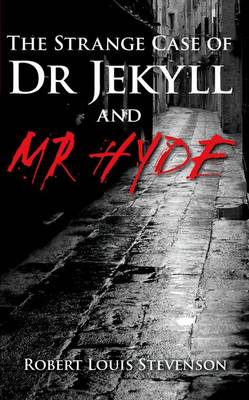
ROBERT LOUIS STEVENSON’S THE STRANGE CASE OF DR JEKYLL AND MR HYDE

The Strange Case of Dr Jekyll & Mr Hyde by Robert Louis Stevenson ...

The Strange Case of Dr. Jekyll and Mr. Hyde was written by Robert Louis Stevenson and published in 1886. The names of Dr. Jekyll and Mr. Hyde, the two alter egos of the main character, have become shorthand for the exhibition of wildly contradictory behaviour, especially between private and public selves. 


Wednesday, 8 April 2020

THE DUALITY OF MAN

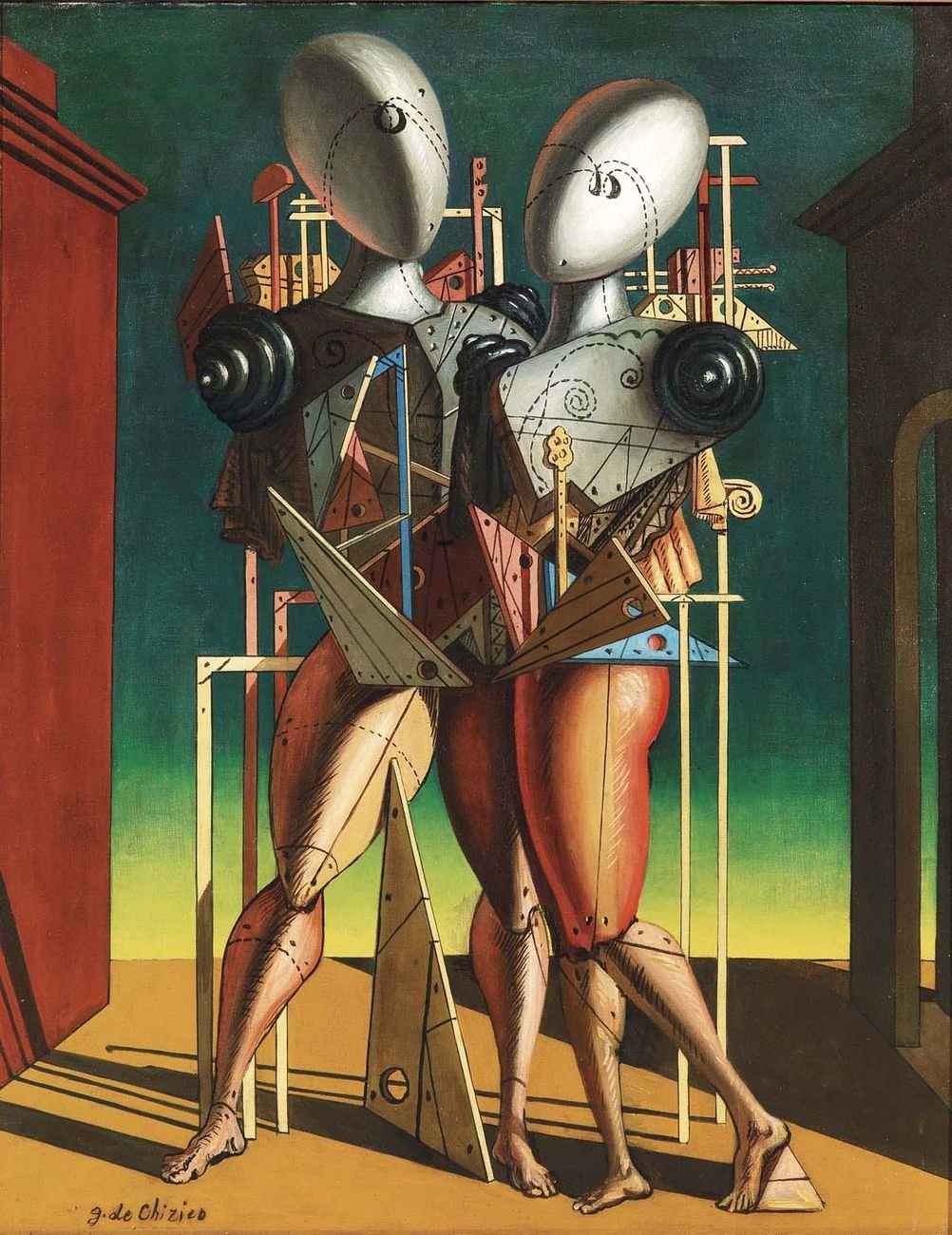
Giorgio de Chirico, Ettore e Andromaca, 1950. Collezione Roberto ...

The idea of a double, or doppelgänger, in literature is a very old concept and one that has brought us many famous works throughout the ages. Doubles are typically used in literature as the kind of "evil twin" of the protagonist (as in Dostoyevsky’s The Double), however the concept can also be used to link two characters together that share the same characteristics and values (as in Virginia Woolf’s Mrs. Dalloway).  Read here.


Thursday, 18 April 2019

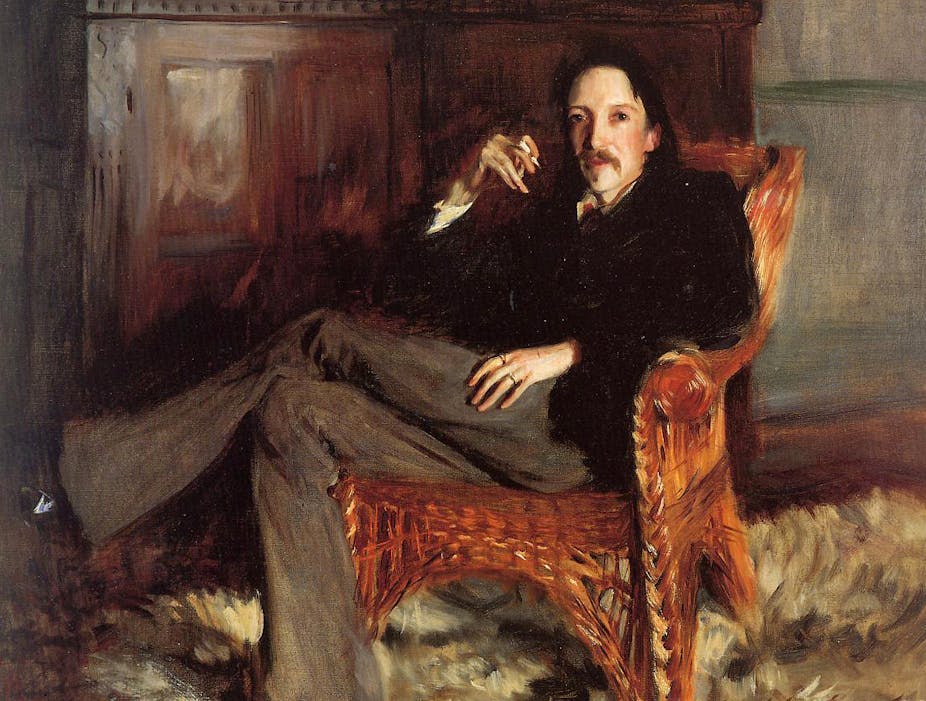
ROBERT LOUIS STEVENSON

Immagine correlata

Robert Louis Stevenson  was a Scottish essayist, poet, and author of fiction and travel books, best known for his novels Treasure Island (1881), Kidnapped (1886), The Strange Case of Dr. Jekyll and Mr. Hyde (1886), and The Master of Ballantrae (1889).  Read here.

Here  you can find a detailed analysis of the novel.


Saturday, 3 December 2016

REVISING ROBERT LOUIS STEVENSON

Immagine correlata

On 3 December 1894  Robert Louis Stevenson  died very suddenly. He had defied his weak lungs for over 40 years, but in the end it was a brain haemorrhage which killed him. He was buried on the summit of Mount Vaea, Vailima, on a small Samoan island in the Pacific with his “Requiem”. 
Fourteen years earlier, when he was very ill in California, he had composed his own epitaph:

"Under the wide and starry sky,
Dig the grave and let me lie.
Glad did I live and gladly die,
And I laid me down with a will.

This be the verse you grave for me:
Here he lies where he longed to be;
Home is the sailor, home from sea,
And the hunter home from the hill.
"


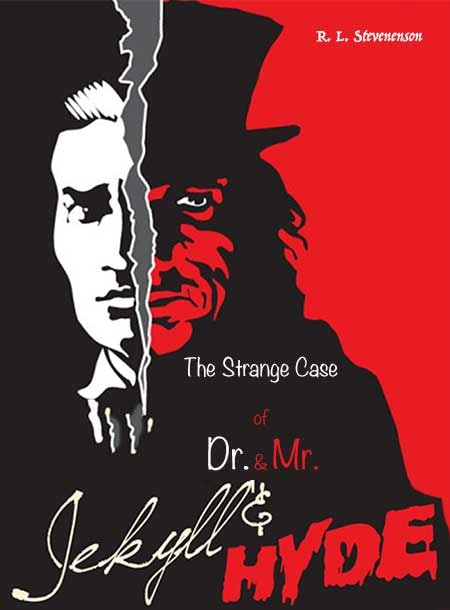
Risultati immagini per robert louis stevenson the strange case of dr jekyll and mr hyde pdf

Here you can find a study guide on Robert Louis Stevenson's most captivating novel, The Strange Case of Dr. Jekyll and Mr. Hyde.

All human beings, as we meet them, are commingled out of good and evil: and Edward Hyde, alone, in the ranks of mankind, was pure evil.” 

Thursday, 12 March 2015

ROBERT LOUIS STEVENSON

Risultati immagini per stevenson

Robert Louis Stevenson is best known as the author of the children’s classic Treasure Island (1883), and the mystery story, The Strange Case of Dr. Jekyll and Mr. Hyde (1886) which deals with the theme of man torn between good and evil forces in his  soul.
The only son of a wealthy civil engineer, he was born in Edinburgh in 1850. He belonged to a very conservative, authoritarian and Calvinist household and was destined to follow his father's career. At the age of 17 he rebelled against the family and entered university to study law, led a Bohemian way of life, became an atheist and took up a critical attitude to the hypocrisy of bourgeois respectability. At the age of 23 he started to travel to attempt to recover from a respiratory illness. In 1876 he met and fell in love with an American divorced  lady, followed her to America  and married her in 1880. In the same year he reconciled with his father, went back to Scotland and began writing stories. He soon had to move to milder climates to cure his bad health. In 1887 he went to America again and then to Samoa where he spent his last years. Native Samoans called him Tusitala, which means storyteller. On  3 December 1894, at forty-four years of age, Stevenson died of a cerebral haemorrhage.
Here you can read The Strange Case of Dr. Jekyll and Mr. Hyde,  which is considered "one of the best guidebooks of the Victorian era" because of its description of the fundamental dichotomy of the 19th century "outward respectability and inward lust (=concupiscence, self-indulgence and moral corruption)" as that period had a tendency for social hypocrisy and self-possession (=reliance on one's own abilities, decisions).