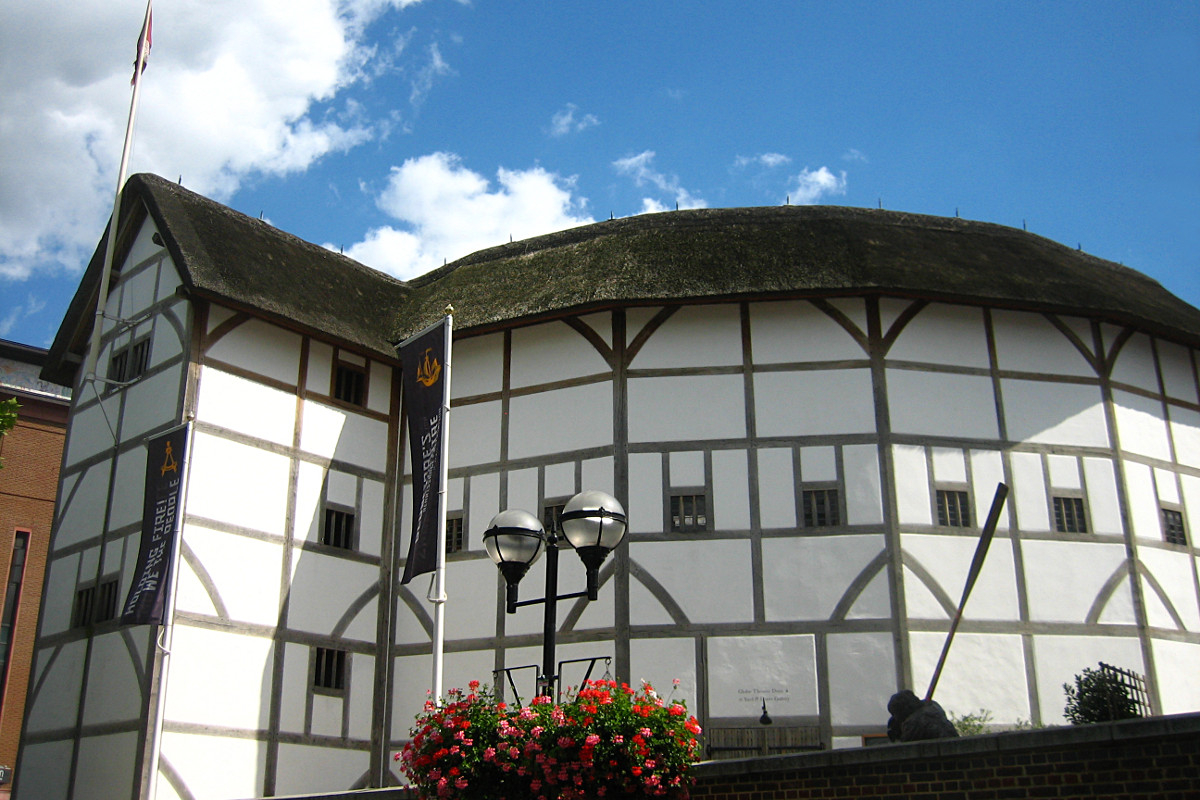
https://myblog-inplainenglish.blogspot.com/2014/02/as-you-like-it.html

The Renaissance was
one of Europe’s most significant historical periods, and is often characterised
by the magnificent outpouring of art, literature, and scientific developments
witnessed between the 15th and 17th centuries.
During this time new ideas spread across the continent, focused on the possibilities of mankind, the achievements of the individual, and the teachings of the ancient world – pushing Europe out of the "Dark Ages" and towards a more enlightened and modern society. Read here.

The Merchant of Venice is regarded as a tragic comedy.
The main
character is the merchant, Antonio who fails and becomes indebted to the
merciless moneylender, Shylock. Antonio’s
friend Bassanio has
borrowed money from Antonio in order to woo Portia, the beautiful
resident of Belmont and it is the reason why Antonio has fallen prey to
Shylock. The other main characters are Jessica, the daughter of Shylock, and
Lorenzo and Gratiano, associates and friends of Bassanio. Read here.
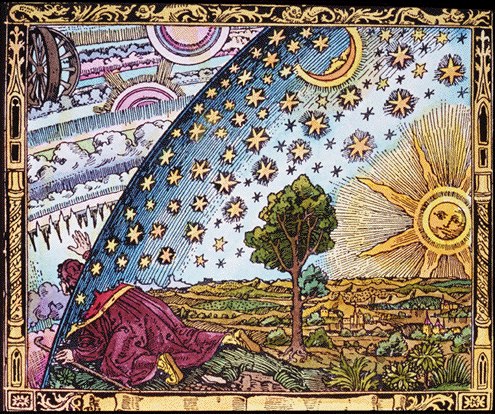

There are more things in
heaven and earth, Horatio,
Than are dreamt
of in our philosophy.
(Hamlet, Act 1 Scene 5)

During Elizabeth I’s reign English playwrights began to write comedies and tragedies. By the end of her reign playwrights such as Marlowe, Johnson and Shakespeare were writing the plays for which they are now famous. Read here.
https://nosweatshakespeare.com/resources/era/elizabethan-theatre-drama/

If you’ve studied any of Shakespeare’s sonnets, you may have heard of "iambic pentameter" … but what exactly is iambic pentameter?
In a line of poetry, an "iamb" is a foot or beat consisting of an unstressed syllable followed by a stressed syllable. Read here.

Romeo and Juliet is a tragedy written by William Shakespeare early in his career about two young Italian star-crossed lovers whose deaths ultimately reconcile their feuding families. It was among Shakespeare's most popular plays during his lifetime and, along with Hamlet, is one of his most frequently performed plays. Today, the title characters are regarded as exemplary young lovers.
http://2013.playingshakespeare.org/index.html

William Shakespeare was a renowned English poet, playwright, and actor born in 1564 in Stratford-upon-Avon. His birthday is most commonly celebrated on 23 April, which is also believed to be the date he died in 1616.
Shakespeare was a prolific writer during the Elizabethan and Jacobean ages of British theatre (sometimes called the English Renaissance or the Early Modern Period). Shakespeare’s plays are perhaps his most enduring legacy, but they are not all he wrote. Shakespeare’s poems also remain popular to this day. Read here.

Queen Elizabeth I died on 24 March 1603. Elizabeth, the last Tudor
monarch and "Virgin Queen", was the daughter of Henry VIII and his
second wife, Anne Boleyn. She became queen in 1558 aged 25 and ruled for 45
years. Her reign saw the defeat of the Spanish Armada, the introduction of a
revised Book of Common Prayer and a golden age of playwrights and poets. Read here.
"Though the sex to which I belong is considered weak you will nevertheless find me a rock that bends to no wind."


Shakespeare was a master character creator, and he invented and brought to life hundreds of characters in his many plays. Read here.

First performed in 1611, The Tempest is different from many of Shakespeare's plays in
that it does not derive from one clear source. The play draws on many of the
motifs common to Shakespeare's works. These include the painful parting of a
father with his daughter, jealousy and hatred between brothers, the usurpation
of a legitimate ruler, the play-within-a-play, and the experiences of courtiers
transplanted to a new environment. It is commonly classified with Pericles, The Winter's Tale, and Cymbeline in a small group
of plays called "romances." These plays contain elements of
comedy and, to a lesser extent, tragedy, but do not wholly belong to either
category. Common elements in Shakespearean romances include experiences of loss
and recovery, as well as imaginative worlds in which magic can play an
important role. Read here.
Prospero uses magic to conjure a storm and torment the survivors of a shipwreck, including the King of Naples and Prospero’s treacherous brother, Antonio. Prospero’s slave, Caliban, plots to rid himself of his master, but is thwarted by Prospero’s spirit-servant Ariel. The King’s young son Ferdinand, thought to be dead, falls in love with Prospero’s daughter Miranda. Their celebrations are cut short when Prospero confronts his brother and reveals his identity as the usurped Duke of Milan. The families are reunited and all conflict is resolved. Prospero grants Ariel his freedom and prepares to leave the island. Read here.