Showing posts with label Ballads. Show all posts

Saturday, 16 May 2020

REVISING BALLADS

Scarborough Fair: A Traditional Yorkshire Ballad – Part II ...

A ballad is a type of poem that tells a story and was traditionally set to music. English language ballads are typically composed of four-line stanzas that follow an ABCB rhyme scheme.  Read here.
Its distinctive style crystallized in Europe in the late Middle Ages and persists to the present day in communities where literacy, urban contacts, and mass media have little affected the habit of folk singing. Read here.


"Scarborough Fair," popularized in the United States by the 1960s singer-songwriting duo Simon & Garfunkel, is an English folk song about a market fair that took place in the town of Scarborough in Yorkshire during medieval times. Read here

Thursday, 18 April 2013

ROBIN HOOD AND MAID MARIAN


Robin Hood is known by everyone as the English outlaw hero, dashing through the greenwood with his band of merry men to rob from the rich and give to the poor, before feasting on poached deer under the stars. Read here

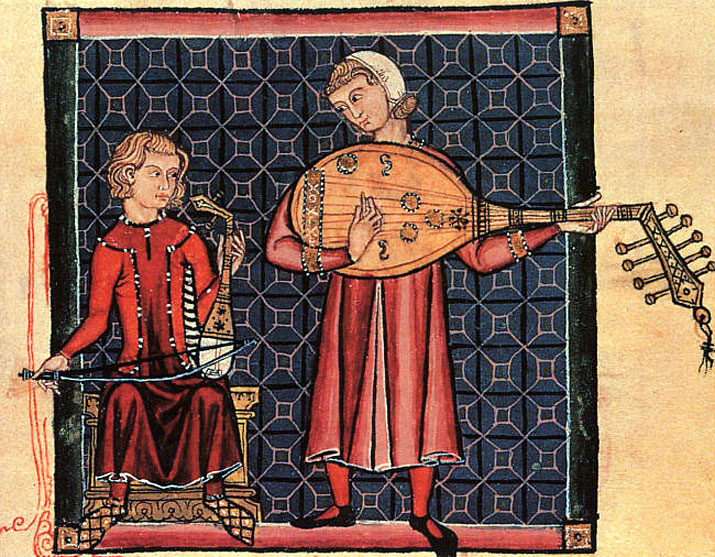
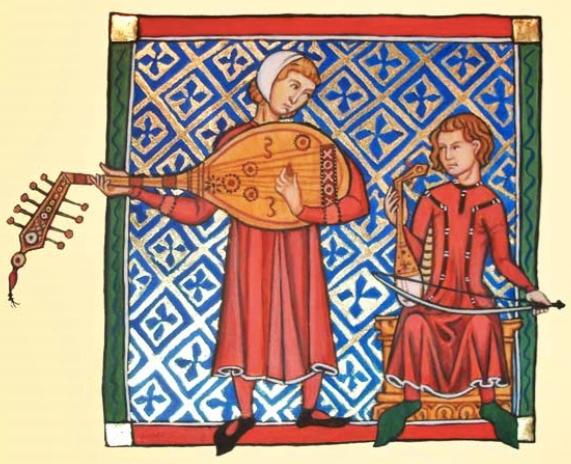
Generations of wandering minstrels in the Middle Ages spread stories far and wide in England by singing ballads about the exploits of the violent but heroic yeoman Robin Hood who lived in Sherwood Forest with his merry band of men and clashed with the Sheriff of Nottingham.

Maid Marian is the heroine of the Robin Hood legend in English folklore, often taken to be his lover. She is not mentioned in the early, medieval versions of the legend. Her history and circumstances are obscure, but she commanded high respect in Robin’s circle for her courage and independence as well as her beauty and loyalty. For this reason, she is celebrated by feminist commentators as one of the early strong female characters in English literature.

https://www.sacred-texts.com/neu/eng/child/ch150.htm

Monday, 25 March 2013

MEDIEVAL BALLADS


Ballads are short, anonymous  narrative  poems or songs which have been preserved and elaborated by oral transmission  over the centuries;  many have been passed from one country to another  with suitable  modifications  to local needs. This happened to many Irish and  Scottish  ballads which sprang up  in modified  forms in America and Australia.
Because of their highly  mutable  oral form,  it is almost impossible  to date  most  ballads.  After Caxton  first set up the printing press in 1477, ballads spread rapidly.
They were an essentially popular tradition of the unschooled and illiterate, which recalled  the early oral verse  narratives of the Celts and the Anglo-Saxons.
Most ballads were set to music, as they were meant to be sung  rather than read.  Thus ballads  are usually in simple quatrains (four-line stanzas) with a repeated  refrain (the repetition of one or more lines).  They are simple in form, plot  and language,  so as to make them easier to remember. 


Ballads can be classified in many different categories, from border ballads  about the rivalry between the English and the Scottish people, to ballads of outlaws celebrating  the lives of outlaws or criminals such as  the cycle of  Robin Hood,  to  ballads of  magic  recounting  stories about fairies,  witches and  ghosts, to ballads  of love and domestic tragedy, to town  ballads which served as a polemical commentary  on difficult  urban conditions.
Here you can find useful material for revision.


Lord Randal  is a traditional  Scottish ballad which  tells "with a certain malicious  humour"  the sad tale of a noble called Lord Randal. It probably derives  from  the late  Middle Ages.


Geordie is a famous English ballad  which presents a rather complex narrative: the story-teller,  or  narrator, meets a young  woman who is lamenting the fate of her lover. 
Its  date of composition is unknown, it may be dated to the late  Middle Ages; it is still widely known today and often sung in traditional as well as modernized versions.


Here  you can download a worksheet about the medieval ballad Geordie.