George Orwell was born Eric Arthur Blair on 25 June 1903 in eastern India,
the son of a British colonial civil servant. He was educated in England and,
after he left Eton, joined the Indian Imperial Police in Burma, then a British
colony. He resigned in 1927 and decided to become a writer. In 1928, he moved
to Paris where lack of success as a writer forced him into a series of menial
jobs. He described his experiences in his first book, Down and Out in
Paris and London, published in 1933. He took the name George Orwell,
shortly before its publication. This was followed by his first novel, Burmese
Days, in 1934.
An anarchist in
the late 1920s, by the 1930s he had begun to consider himself a socialist. In
1936, he was commissioned to write an account of poverty among unemployed
miners in northern England, which resulted in The Road to Wigan Pier (1937).
Late in 1936, Orwell travelled to Spain to fight for the Republicans against
Franco's Nationalists. He was forced to flee in fear of his life from
Soviet-backed communists who were suppressing revolutionary socialist
dissenters. The experience turned him into a lifelong anti-Stalinist.
Between 1941 and
1943, Orwell worked on propaganda for the BBC. In 1943, he became literary
editor of The Tribune, a weekly left-wing magazine. By now he was a prolific
journalist, writing articles, reviews and books.
In 1945,
Orwell's Animal Farm was published. A political fable set in a
farmyard, but based on Stalin's betrayal of the Russian Revolution, it made
Orwell's name and ensured he was financially comfortable for the first time in
his life. Nineteen Eighty-Four was published four years later.
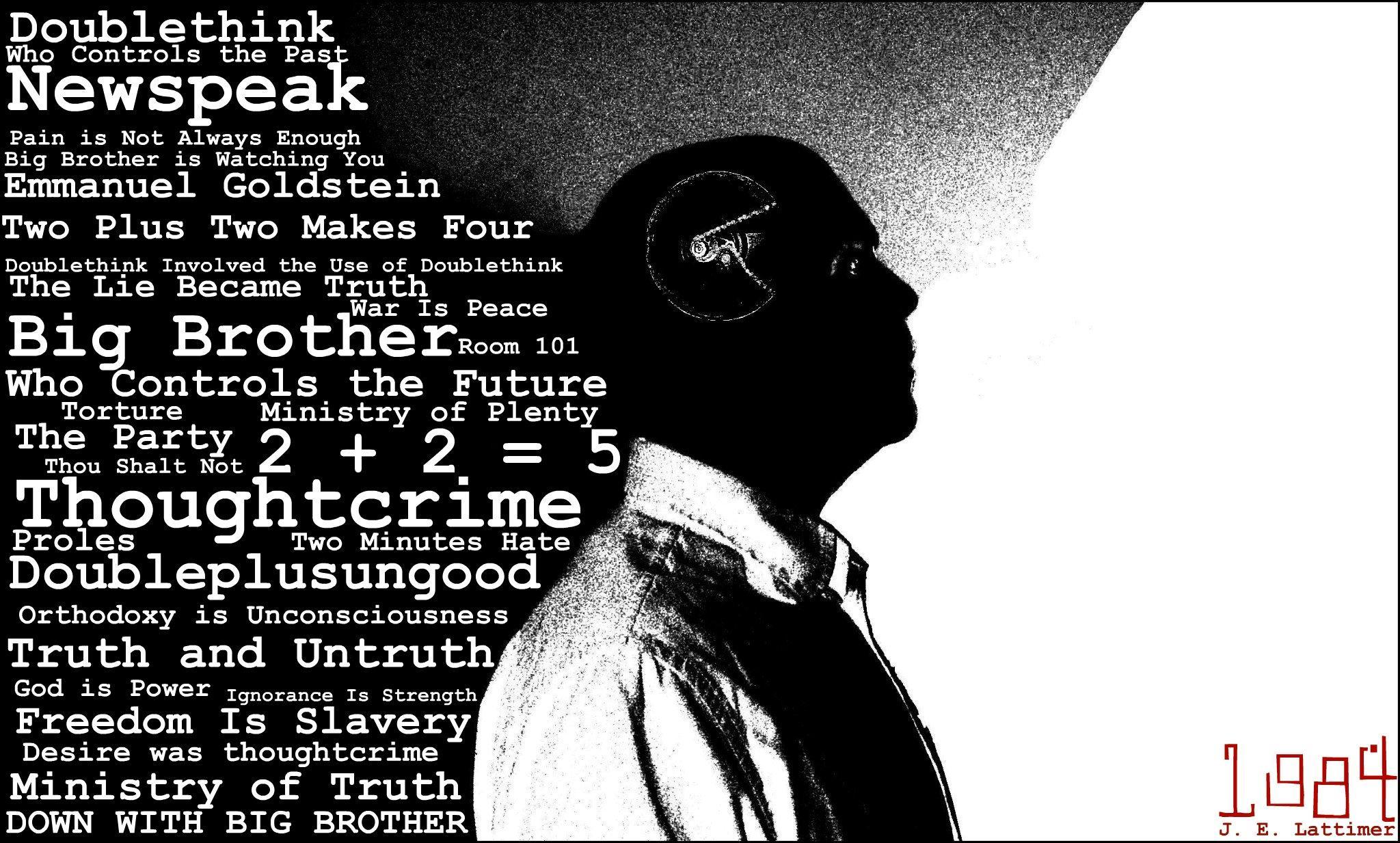
Set in an imaginary totalitarian future, the book made a deep impression, with
its title and many phrases - such as "Big Brother is watching you", "newspeak" and "doublethink" - entering popular use. By now Orwell's health was
deteriorating and he died of tuberculosis on 21 January 1950.