
Thursday, 4 July 2013

Monday, 1 July 2013

Friday, 21 June 2013
WHAT IS THE SUMMER SOLSTICE?

The summer solstice marks the peak of summer and takes place on the
longest day of the year, that is to say when the Sun is at its highest in the sky. In Britain
and other places north of the equator, to be precise the Northern Hemisphere, this
takes place on June 21. After the summer solstice the days get shorter until the winter solstice
when they start to get longer again.
June 21 is called the summer solstice in the Northern
Hemisphere and simultaneously the winter solstice in the Southern Hemisphere. Around December 21 the solstices are reversed and winter begins in the Northern hemisphere.
The summer solstice has been celebrated since ancient times and is still
celebrated around the world today.
Many people gather at Stonehenge which is believed to have been used as an important religious site by early Britons 4,000 years ago.
Here you can read an interesting article about the meaning of the summer solstice.
Many people gather at Stonehenge which is believed to have been used as an important religious site by early Britons 4,000 years ago.
Here you can read an interesting article about the meaning of the summer solstice.
Thursday, 20 June 2013
II PROVA SCRITTA ESAMI DI STATO
The end of the school year has finally come about
As to my students of 5^ C
Liceo Linguistico, today they had to sit for their II Prova Scritta, a Foreign
Language written exam, but they had the opportunity to decide on the English, Spanish or French language.
As usual, the English test included a text analysis, a summary and a
composition, but there was a choice between an article about sealing
your love with a Master Lock in Paris, taken from The Wall Street Journal, Europe Edition, and a passage
from The Great Gatsby by the American
author Francis Scott Fitzgerald, a love story set in the 1920s - a period of jazz and
decadence.
Here you can
download both of them, just in case you are curious!

Sunday, 9 June 2013
MISS AUSTEN REGRETS

Miss Austen Regrets is a BBC-produced drama film that depicts the last years of Jane Austen's life. Approaching her fortieth birthday, Jane Austen appears happily unmarried and displays all the assured wit and charm of her novels' young heroines. Yet when asked to help her young niece, Fanny Knight, find a husband, her confident composure is threatened. She finds herself looking back on her potential suitors and the choices she has made.
Born the daughter of an English Anglican minister in 1775, she died in
1817 at age forty-one, unmarried and
poor; she left us with six completed novels acclaimed
by many to be literary perfection.
Traditional views on Jane Austen's love life vary, and little evidence
still exists today to support much of a story. What we know survives from her
personal letters and family recollections of a quiet 18th century life, spent in privacy and decorum. Apart from the one
known proposal by Harris Bigg-Wither, no other known love affairs were
documented. Unfortunately, much of Jane Austen's personal correspondence, that
could have supplied more private details, was destroyed after her death by her
sister Cassandra. From what we know, the question surrounding Jane Austen's
life is how an individual with little personal experience of romance and love
could write with such understanding about the nature of the human heart.
In this speculative tale, director Jeremy Lovering and
screenwriter Gwyneth Hughes look into the motives why the real Jane
Austen never found her own Mr. Darcy.
Now
let’s watch the trailer of this beautiful film, graced with an excellent performance by Olivia Williams.
Tuesday, 4 June 2013
60TH ANNIVERSARY OF THE QUEEN'S CORONATION
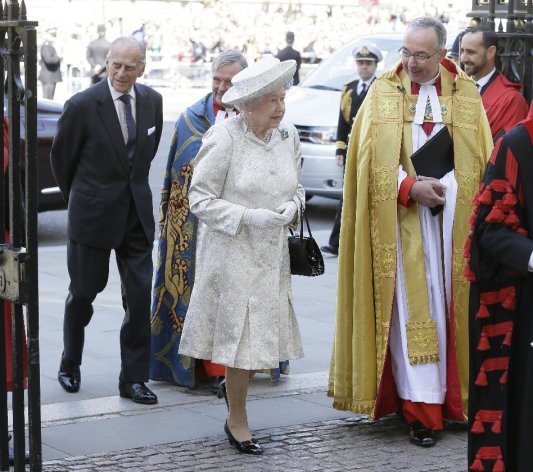
The Queen has joined 2,000 guests for a service at Westminster Abbey to
mark 60 years since her Coronation.
Some
of those who took part in the 1953 service were among the congregation. Inside
the abbey, several generations of the royal family
waited: the Queen's son, Prince Charles, now in his 60s, and next in line to
the throne, and her grandson, Prince William, second in line, with his pregnant wife Catherine, Duchess of Cambridge, who is due to give birth to
yet another royal heir next month.
Britain's
Prime Minister David Cameron - the 12th to serve under Queen Elizabeth - gave
the reading to all the guests gathered at the abbey.
Archbishop of Canterbury the Most Rev Justin Welby said the event
honoured "60 years of commitment".
Several key items from the Coronation were placed in
Westminster Abbey for the service.
They included the heavy, solid gold St Edward's Crown, displayed on the
High Altar – it hasn’t been out of the
Tower of London since 1953. Beside it was the Ampulla, the gold, eagle-shaped
bottle from which the holy oil was poured for the Queen's anointing. The Coronation Chair, one of the oldest pieces of
English furniture still in use, was also on show.
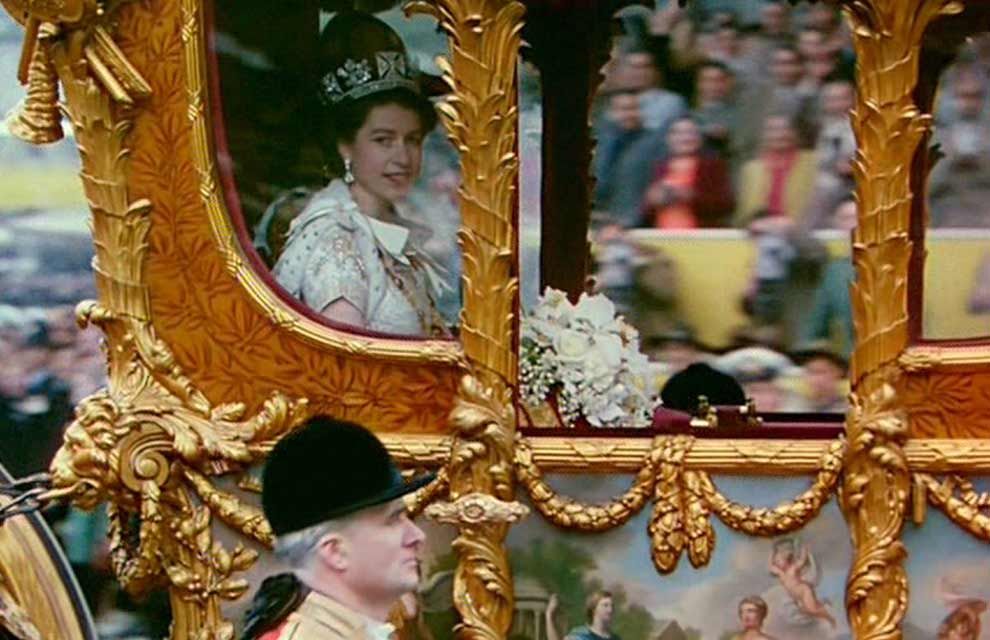
Here you can watch a beautiful video of the 1953 Coronation ceremony!
Saturday, 1 June 2013

Friday, 31 May 2013
AN IRISHMAN'S PHILOSOPHY
In
life, there are only two things to worry about:
Either you are well or you are sick.
If you are well, there is nothing to worry about.
But if you are sick,
there are only two things to worry about:
Either you will get well or you will die.
there are only two things to worry about:
Either you will get well or you will die.
If you get well, there is nothing to worry about.
But if you die,
there are only two things to worry about:
Either you will go to heaven or hell.
Either you will go to heaven or hell.
If you go to heaven, there is nothing to worry about.
But if you go to hell,
You'll be so busy shaking hands with friends
You won't have time to worry!
You'll be so busy shaking hands with friends
You won't have time to worry!
~ Author Unknown ~

GEORGE ORWELL
"Power is not a means, it
is an end. One does not establish a dictatorship in order to safeguard a
revolution; one makes the revolution in order to establish the
dictatorship."
George Orwell

You can download an overview of George Orwell.
His literary masterpiece Nineteen Eighty-Four is considered the definitive dystopian novel, a chilling prophecy about the future, set in a world beyond our imagining.
Sunday, 26 May 2013
SHE LOVED LIFE, LONDON, THIS MOMENT OF JUNE
The novel starts with one of Clarissa's monologues;
nothing really happens in this passage, but much is revealed about
the central character's thoughts and feelings. In fact, it
introduces the reader to the stream-of-consciousness technique, characterized by a
flow of thoughts and images, which may not always appear to have a coherent
structure or cohesion.
It is a style of writing evolved by authors at the
beginning of the 20th century
to express in words the flow of a character's thoughts and feelings. The
technique aims to give readers the impression of being inside the mind of the
character - an internal view that illuminates plot and motivation in the novel.
Thoughts spoken aloud are not always the same as those "on the floor of
the mind", as Virginia Woolf put it.
"Stream of consciousness" has its origins in the late
19th century with the birth
of psychology. An American psychologist, William James (brother of novelist
Henry), first used the phrase in his Principles of Psychology of
1890 to describe the flow of conscious experience in the brain.
The term was first used in a literary sense by May
Sinclair in her 1918 review of a novel by Dorothy Richardson. Other authors
well known for this style include Katherine Mansfield, William Faulkner and,
most remarkably, James Joyce.

Saturday, 25 May 2013
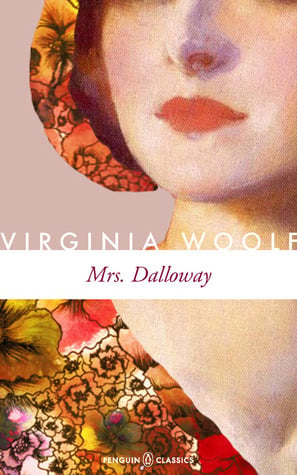
MRS DALLOWAY

Virginia Woolf’s Mrs.
Dalloway, published in 1925, was a bestseller both in Britain and the
United States despite its rejection of typical novelistic style.
The action of Mrs. Dalloway takes place during a single day in June 1923 in
London, England. This unusual organizational strategy creates a special problem
for the novelist, that is to say how to create characters deep enough to
be realistic while treating only one day in their lives. Virginia Woolf solved
this problem with what she called a “tunneling” technique, referring to the way
her characters remember their pasts. In experiencing these characters’
recollections, readers derive for themselves a sense of background and history
to characters that, otherwise, a narrator would have had to provide.
In a sense, Mrs.
Dalloway is a novel without a plot. Instead of creating major situations
between characters to push the story forward, Virginia Woolf moved her
narrative by following the passing hours of a day. The book is composed of
movements from one character to another, or of movements from the internal
thoughts of one character to the internal thoughts of another.
Mrs. Dalloway depicts people
walking about a city. The book makes the city, its parks, and its streets
as interesting as the characters who inhabit them.
Clarissa
Dalloway’s party, which is the culminating event of the book, ties the
narrative together by gathering the group of friends Clarissa thinks about
throughout her day. It also concludes the secondary story of the book, the
story of Septimus Warren Smith, by having Dr. Bradshaw arrive at the party and
reveal that one of his patients committed suicide that day.
The book’s major
themes are sanity and insanity, isolation and community, or the
possibilities and limits of communicativeness, as evidenced by Clarissa’s
permanent sense of being alone and by her social skills, which bring people
together at her parties.
Wednesday, 15 May 2013
A GAELIC PRAYER
Deep peace of running waves to you.
Deep peace of flowing air to you.
Deep peace of the smiling stars to you.
Deep peace of the quiet earth to you.
Deep peace of the watching shepherds to you.
Deep peace of the Son of Peace to you.
Tuesday, 14 May 2013
VIRGINIA WOOLF

Virginia
Woolf was born in London in 1882, the daughter of the
Victorian literary critic Leslie Stephen. She
lived and was educated in a highly intellectual atmosphere at home,
as her father was friendly with many of the main literary figures of
the period, among them Henry James. Her mother died when
she was 13 and the loss influenced her profoundly. It was
soon after her mother’s death that she had the
first of a series of nervous breakdowns which affected
her all her life. When her father died in 1904, she moved to a new area of
London, Bloomsbury, where she founded a close circle of
intellectuals, who became known as the “Bloomsbury Group”.
Among them there was Leonard Woolf, who later became her husband, and the
novelist E.M. Forster, besides painters and art critics.
The Bloomsberries
shared the desire to challenge the strict Victorian social norms, and
demonstrated a sexual freedom that was ahead of their time. They were
rather elitist and exclusive. They were highly criticized for their snobbishness
and selfishness. The group was also reproached with its pacifism during the
First World War.


Sunday, 5 May 2013
A ROOM WITH A VIEW
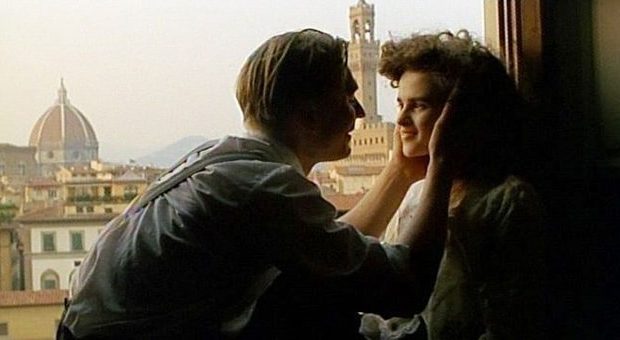
A Room with a View is a 1908 novel by
English writer E. M. Forster, about a young woman in the repressed
culture of Edwardian era England. Set in Italy and England,
the story is both a romance and a critique of English society
at the beginning of the 20th century.
In 1998, the Modern Library ranked A Room with a View 79th on its list of the 100 best English-language novels of the 20th century.
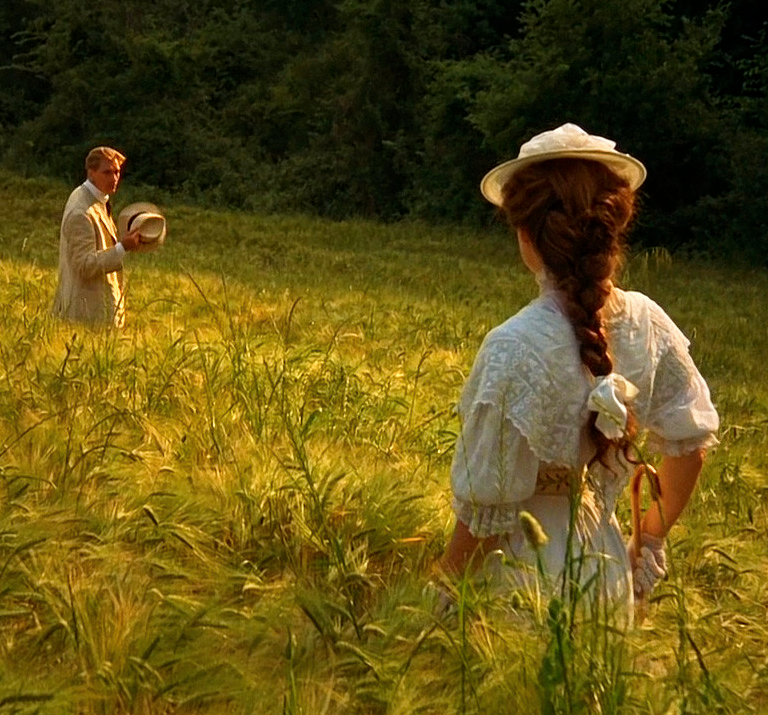
A Room with a View is also a 1985 British drama film directed by James
Ivory and produced by Ismail
Merchant. The film is a close adaptation
of E. M. Forster's novel and even uses his chapter titles to
divide the film into sections. It stars Maggie
Smith as "Charlotte Bartlett", Helena Bonham Carter as
"Lucy Honeychurch", Judi Dench as "Eleanor
Lavish", Julian Sands as "George
Emerson," Daniel Day-Lewis as "Cecil Vyse" and Simon
Callow as "The Reverend Mr. Beebe".
Wednesday, 1 May 2013
HAPPY MAY DAY!

May Day on May 1 is
an ancient Northern Hemisphere spring festival and usually
a public holiday; it is also a traditional spring holiday in many
cultures.
The
earliest May Day celebrations appeared in pre-Christian times, with the
festival of Flora, the Roman goddess of flowers, and the Walpurgis Night celebrations of the Germanic countries. It is also associated with the Gaelic Beltane. Many pagan celebrations were abandoned or
Christianized during the process of conversion in Europe.
A more
secular version of May Day continues to be observed in Europe and America. In
this form, May Day may be best known for its tradition of dancing "the maypole dance" and crowning of the May Queen.
Fading in popularity since the late
20th century is the giving of "May baskets", small baskets of sweets
and/or flowers, usually left anonymously on neighbours' doorsteps.
Here you can read an interesting article about May Day as "a cornucopia of holidays" ...

Subscribe to:
Posts (Atom)