Here you can find an overview of the 20th century.
Saturday, 2 May 2015
Friday, 1 May 2015
Thursday, 30 April 2015
A MODERN ADAPTATION OF PRIDE AND PREJUDICE
Pride &
Prejudice: A Latter-Day Comedy is a delightful, modernised retelling of Jane
Austen's beloved story as the ambitious but amiable Elizabeth Bennet schemes to
win over a sexually
attractive bachelor who is several rungs above her in the social
ladder ... Read here.
Sunday, 26 April 2015
Thursday, 23 April 2015
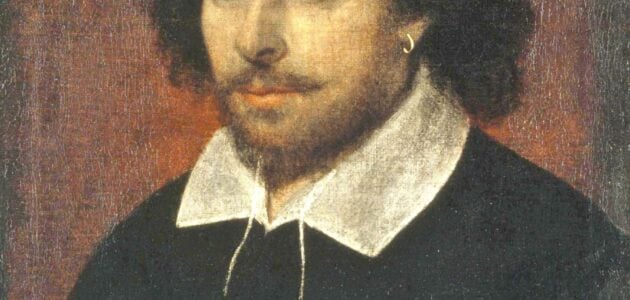
HAPPY 451ST BIRTHDAY, WILLIAM SHAKESPEARE!
Today it is William Shakespeare's 451st birthday!
Here you can find some interesting videos about the Bard and his influence on some acclaimed theatre performers.
Wednesday, 15 April 2015
GREAT EXPECTATIONS
Great Expectations is a bildungsroman which depicts the personal growth
and emotional development of an orphan nicknamed Pip. It is Charles
Dickens's second novel, after David Copperfield, to be fully
narrated in the first person. It was first published as a serial in Charles Dickens's weekly periodical All the Year Round, from 1
December 1860 to August 1861. In October 1861,
the novel was published in three volumes.
It is set in the misty marshes of Kent, and in London, in the early to mid-1800s, and
contains some memorable scenes, such as the opening, in a
graveyard, where the young Pip is approached by the escaped prisoner, Abel Magwitch. Great
Expectations is full of intense imagery – poverty, prison ships and
chains, and fights to the death – and has a variegated cast of
characters who have entered popular culture. These include the spectral Miss Havisham, and the cold and gorgeous Estella. The themes of the novel include
wealth and poverty, love and rejection, and the final triumph of good over
evil. Charles Dickens
felt Great
Expectations was his best work, calling it "a very fine idea".
Sunday, 5 April 2015
Wednesday, 1 April 2015
Tuesday, 31 March 2015
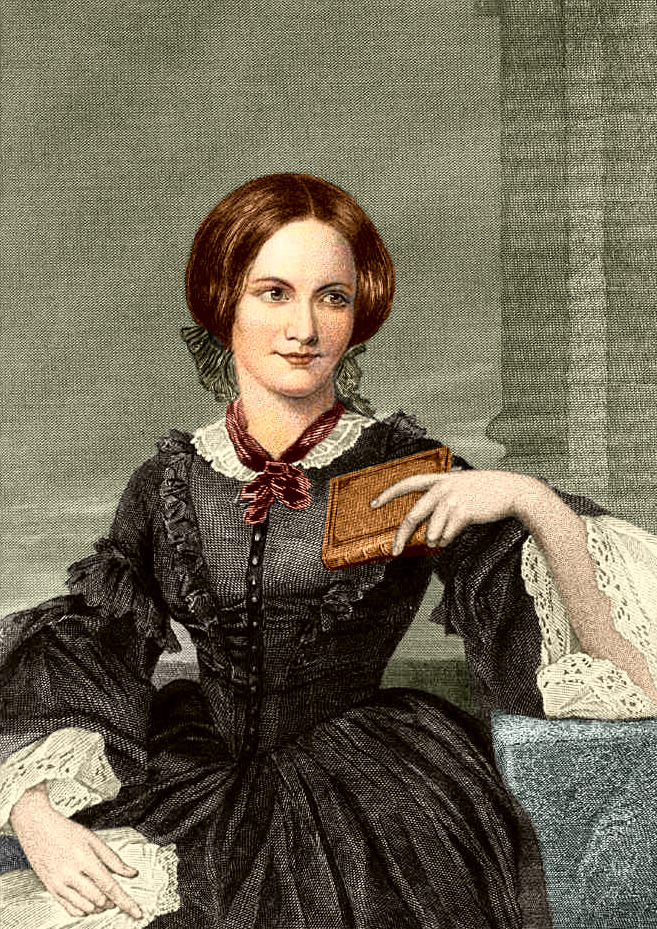
COMMEMORATING CHARLOTTE BRONTË
Charlotte Brontë, the
last surviving child of her family, died aged 38 and pregnant on 31
March 1855 (Easter Saturday) in Haworth.
Click here to read her most famous novel, Jane Eyre, online.
I am neither a man nor a woman but an author.
Charlotte Brontë
Sunday, 29 March 2015
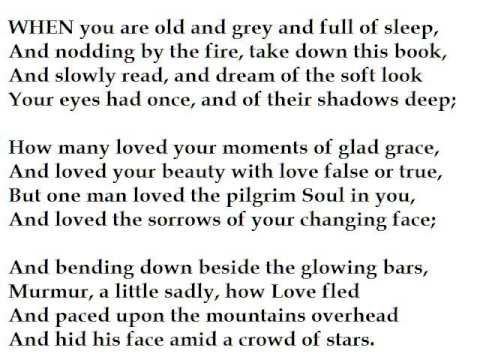
WHEN YOU ARE OLD ...
Click here and here to find useful analyses of this poem by W.B.Yeats, based on Pierre de Ronsard's Quand Vous Serez Bien Vieille (1578).
Friday, 20 March 2015
Thursday, 19 March 2015
SHAKESPEARE WEEK
Shakespeare Week is a national annual celebration giving primary school children a great first encounter with Shakespeare. Read here.
Tuesday, 17 March 2015
Thursday, 12 March 2015
ROBERT LOUIS STEVENSON
Robert Louis Stevenson
is best known as the author of the children’s classic Treasure Island (1883), and the mystery story, The Strange
Case of Dr. Jekyll and Mr. Hyde (1886) which deals with the theme of man torn between good and evil forces in his soul.
The only son of a wealthy civil engineer, he was born in Edinburgh in 1850. He belonged to a very conservative, authoritarian and Calvinist household and was destined to follow his father's career. At the age of 17 he rebelled against the family and entered university to study law, led a Bohemian way of life, became an atheist and took up a critical attitude to the hypocrisy of bourgeois respectability. At the age of 23 he started to travel to attempt to recover from a respiratory illness. In 1876 he met and fell in love with an American divorced lady, followed her to America and married her in 1880. In the same year he reconciled with his father, went back to Scotland and began writing stories. He soon had to move to milder climates to cure his bad health. In 1887 he went to America again and then to Samoa where he spent his last years. Native Samoans called him Tusitala, which means storyteller. On 3 December 1894, at forty-four years of age, Stevenson died of a cerebral haemorrhage.
Here you can read The Strange Case of Dr. Jekyll and Mr. Hyde, which is
considered "one of the best guidebooks
of the Victorian era" because of its description of the
fundamental dichotomy of the 19th century "outward respectability and
inward lust (=concupiscence, self-indulgence and moral corruption)" as that period had a tendency for social hypocrisy and self-possession (=reliance on one's own abilities, decisions).

Labels:
5^C Linguistico,
Literature,
Novels,
R.L.Stevenson,
The Victorian Age
Sunday, 1 March 2015
MARCH
"Oh, give us pleasure in the flowers today;
And give us not to think so far away
As the uncertain harvest; keep us here
All simply in the springing of the year.
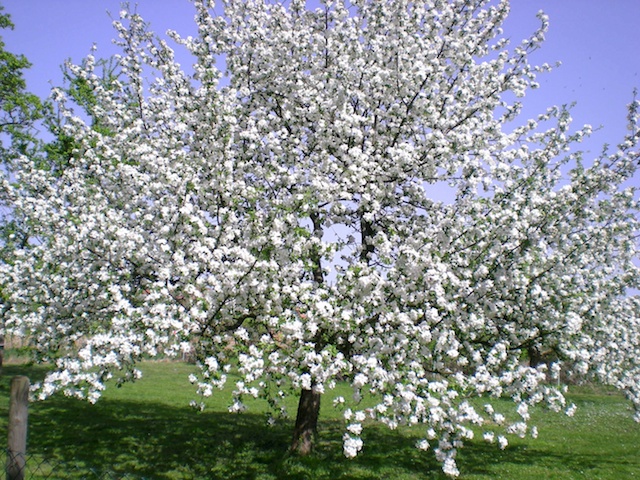
Oh, give us pleasure in the orchard white,
Like nothing else by day, like ghosts by night;
And make us happy in the happy bees,
The swarm dilating round the perfect trees."
Robert Frost, A Prayer in Spring
Subscribe to:
Posts (Atom)