The English language has
lots of silent letters which cause
difficulties for both native speakers and English learners, because they make
the spelling of words different from their pronunciation. Read here.
Tuesday, 8 August 2017
Monday, 7 August 2017
Wednesday, 26 July 2017
BRAVE NEW WORLD
Brave New World is a novel written in 1931 by Aldous Huxley, and published in 1932. Set in London in the year AD 2540 (632
A.F. - "After Ford" - in the book), the novel anticipates
developments in reproductive technology, sleep-learning, psychological
manipulation, and classical conditioning that are combined to
profoundly change society.
Here you can find a detailed analysis of the novel and here you can discover some interesting facts about its author.
The title derives
from Miranda's speech in William Shakespeare's The Tempest, Act V, Scene I:
O wonder!
How many goodly
creatures are there here!
How beauteous mankind is! O brave new world,
That has such people in't.
Tuesday, 18 July 2017
Monday, 17 July 2017
JANE AUSTEN BEHIND CLOSED DOORS
Lucy Worsley explores the different houses in which Jane Austen lived and stayed, to discover just how much they shaped Jane's life and novels.
Here you can watch the video.
Sunday, 16 July 2017
Saturday, 1 July 2017
Friday, 23 June 2017
II PROVA SCRITTA ESAMI DI STATO
Yesterday my students of 5^C and 5^D Liceo Linguistico took an English test on the day of their
II Prova Scritta.
It included a text analysis and a composition, but
they could choose among four different articles. All of them were rather thought-provoking and somewhat difficult.
You can download them here.
Friday, 16 June 2017
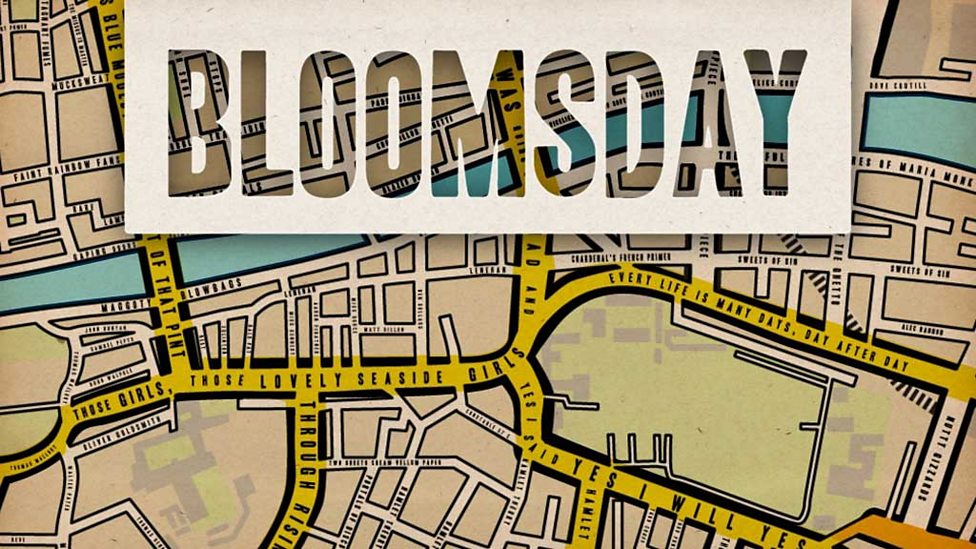
BLOOMSDAY

Bloomsday is
a commemoration and celebration of the life of Irish writer James Joyce, during which the events of his novel Ulysses, set on 16 June
1904, are relived. It is observed annually on 16 June in Dublin.
James
Joyce chose the date as it was the date of his first outing with his
wife-to-be, Nora Barnacle. The name is derived from Leopold
Bloom,
the protagonist of Ulysses.
Let's take a journey through James Joyce's
Dublin and the events of Bloomsday here.

Monday, 12 June 2017
FEVER PITCH

Read Nick Hornby's autobiographical essay here.
It is the story of the author's relationship with football and with Arsenal Football Club, above all. It
is composed of several chapters in chronological order, from the time the author
first became a football fan as a child until his early thirties. Each chapter
is about a particular football match that he remembers watching, most but not all
at Highbury Stadium, and how it related to
the events that were going on with his personal life at the time. As well as
relating Arsenal's highs and lows, Nick Hornby talks about other football clubs
that played in London.
You can find a detailed analysis of the book here.
Saturday, 10 June 2017
SUMMER HOMEWORK - 3^C LINGUISTICO
See you in September!
Friday, 9 June 2017
DANIEL DEFOE'S ROBINSON CRUSOE
From Shakespeare’s The Tempest to the
film Cast Away, starring Tom Hanks, and the TV series Lost, life on a desert island has
always served as an inspiration for writers.
Numerous stories of real life stranded sailors provided inspiration for
the most famous castaway of them all, Daniel Defoe’s Robinson Crusoe.
Robinson Crusoe was a bestseller in 1719, the year it was
published. Epistolary, confessional, and didactic in form, the book is a
fictional autobiography of the title character (whose real name is Robinson
Kreutznaer), a castaway who spends 28 years on a remote tropical island
near Trinidad, encountering cannibals, captives, and mutineers before being
rescued.
The story was based on the real-life experiences
of Alexander Selkirk, a Scottish castaway who lived for four years
on a Pacific island called "Más a Tierra", now part of Chile,
which was renamed Robinson Crusoe Island in 1966.
Defoe’s focus on the conditions of everyday life and avoidance of the
courtly and the heroic made him a revolutionary in English literature and
helped define the new genre of the novel. Stylistically, Defoe was a great
innovator. He rejected the ornate style associated with the upper
classes and used the simple, direct, fact-based style of the middle
classes, which became the new standard for the English novel.
With Robinson Crusoe’s theme of solitary human existence,
Defoe paved the way for the central modern theme of alienation and isolation.
Here you can download a PDF Presentation
to widen your knowledge of the first real novel in English literature!
Labels:
Daniel Defoe,
Novels,
The 18th century,
The Augustan Age
Thursday, 8 June 2017
Subscribe to:
Posts (Atom)