
Monday, 13 March 2017

Wednesday, 1 March 2017
THE VICTORIAN AGE - 5^C AND 5^D LINGUISTICO

The Reform Bill of 1832
gave the middle class the political power it needed to strengthen the economic
position it had already achieved. Industry and commerce flourished. While the wealth
of the middle class increased, the lower classes, thrown off their land and
into the cities to form the great urban working class, lived ever more miserably.
The social changes were so fast and brutal that intellectuals rapidly gave way
to attempts either to justify the new economic and urban conditions, or to
change them. The artists of the age had to deal in some way with the upheavals (=disorders) in society, the evident injustice of affluence (=wealth) for a few and squalor for many,
and, emanating from the throne of Queen Victoria (1837-1901), an emphasis on
public rectitude and moral propriety.
Here you can find a mind map of the Victorian Age.

Tuesday, 28 February 2017
THE BLUEBERRY STORY

Do you know why schools shouldn't be run as businesses? Read here a clear-cut article about this controversial issue.
Monday, 27 February 2017
JOHN STEINBECK
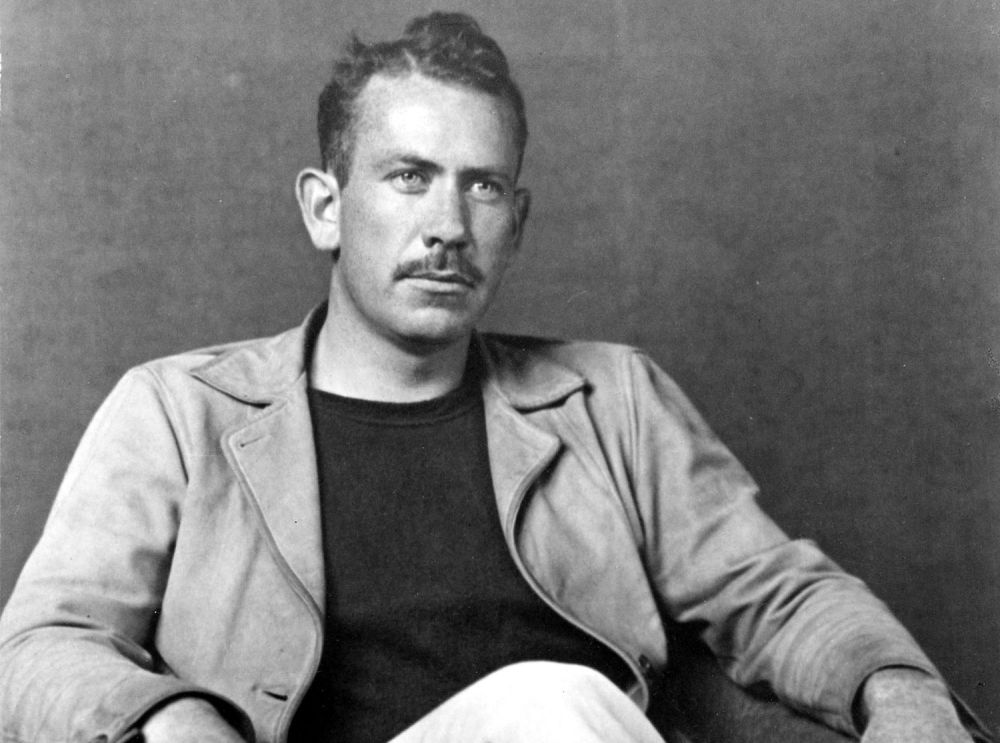
John Steinbeck, American author and winner of the Nobel Prize in 1962, was a leading writer of novels about the working class and was a major spokesman for the victims of the Great Depression in the 1930s, during which time millions of people lost their jobs.
He was born in Salinas, California, on 27 February 1902.
He was the type of author who liked to know his material firsthand. He didn't want to narrate a story which had no basis in fact. Thus, many of his works take place in California, where he lived, and they deal with subjects which he thoroughly understood. Within his novels are characters who seem to breathe the very reality of life itself. Read here.
Wednesday, 22 February 2017
REVISING BEOWULF - 3^C LINGUISTICO

Here you can find my previous post about Beowulf, the longest epic poem in Old English, the language spoken in Anglo-Saxon England before the Norman Conquest. More than 3,000 lines long, Beowulf relates the exploits of its hero, and his successive battles with a monster named Grendel, with Grendel’s revengeful mother, and with a dragon which was guarding a hoard of treasure.
Here you can download a PDF presentation.
Here you can download a PDF presentation.
It is to be noted that there are many similarities between J.R.R. Tolkien's The Lord of the Rings and Beowulf.
Tolkien uses many concepts found in Beowulf. In fact, he was a professor of Anglo-Saxon, and an expert on the Anglo-Saxon epic poem. Read here.
Thursday, 16 February 2017
ANCIENT BRITAIN - 3^C LINGUISTICO

Stonehenge
The Celts
The Romans in
Britain
An overview of Roman
Britain
Ancient Britain PDF presentation
Friday, 10 February 2017
THE TEMPEST - 4^C LINGUISTICO

Here and here you can find my previous posts about this delightful Shakespearean play.
You can read The Tempest here and you can find a fascinating interpretation of the play here - it contains echoes of Shakespeare’s earlier plays, and the powerful art that Prospero possesses can be compared to the playwright’s theatrical art.
You can read The Tempest here and you can find a fascinating interpretation of the play here - it contains echoes of Shakespeare’s earlier plays, and the powerful art that Prospero possesses can be compared to the playwright’s theatrical art.
Wednesday, 1 February 2017

Saturday, 28 January 2017
A MIDSUMMER NIGHT'S DREAM - 4^C LINGUISTICO

A Midsummer Night's Dream was
written in 1595 or 1596, at about the same time as Romeo and Juliet. There are evident
plot links between A Midsummer Night's Dream and Romeo and Juliet, both
plays give emphasis to the conflict between love and social convention, but the
plot of "Pyramus and Thisbe," the play-within-the-play of A Midsummer
Night's Dream, parallels that of Romeo and Juliet. Critics
have wondered if Romeo and Juliet is a
serious reinterpretation of the other play, or just the opposite - perhaps
Shakespeare is mocking his tragic love story through the farce of "Pyramus and Thisbe."
Most critics
believe the play was written for and performed at an aristocratic wedding, with
Queen Elizabeth I in attendance.
Here you can find
my previous post about this enchanting play.
Saturday, 14 January 2017
LEWIS CARROLL

Lewis Carroll, author of the children's classics Alice's Adventures in Wonderland and
its sequel Through the Looking-Glass, died on 14 January
1898.
Here you can find a detailed analysis
of Alice's Adventures in Wonderland.
Sunday, 8 January 2017

Sunday, 1 January 2017


Saturday, 31 December 2016

Subscribe to:
Posts (Atom)